
AI vs Traditional Fashion Photoshoot Cost in 2026
Traditional fashion photoshoot costs $150–$1,500 per image in 2026. AI delivers comparable 4K shots for $0.50–$3 — 50× to 500× cheaper at the fidelity-first tier.
Last verified:
Short answer: A traditional fashion photoshoot costs $150–$1,500 per finished, retouched image in 2026. AI-generated alternatives — when the model is fidelity-first — land between $0.50 and $3.00 per image at comparable 4K quality. For a 500-SKU catalog, that's the difference between a $250,000 production budget and one closer to $1,500.
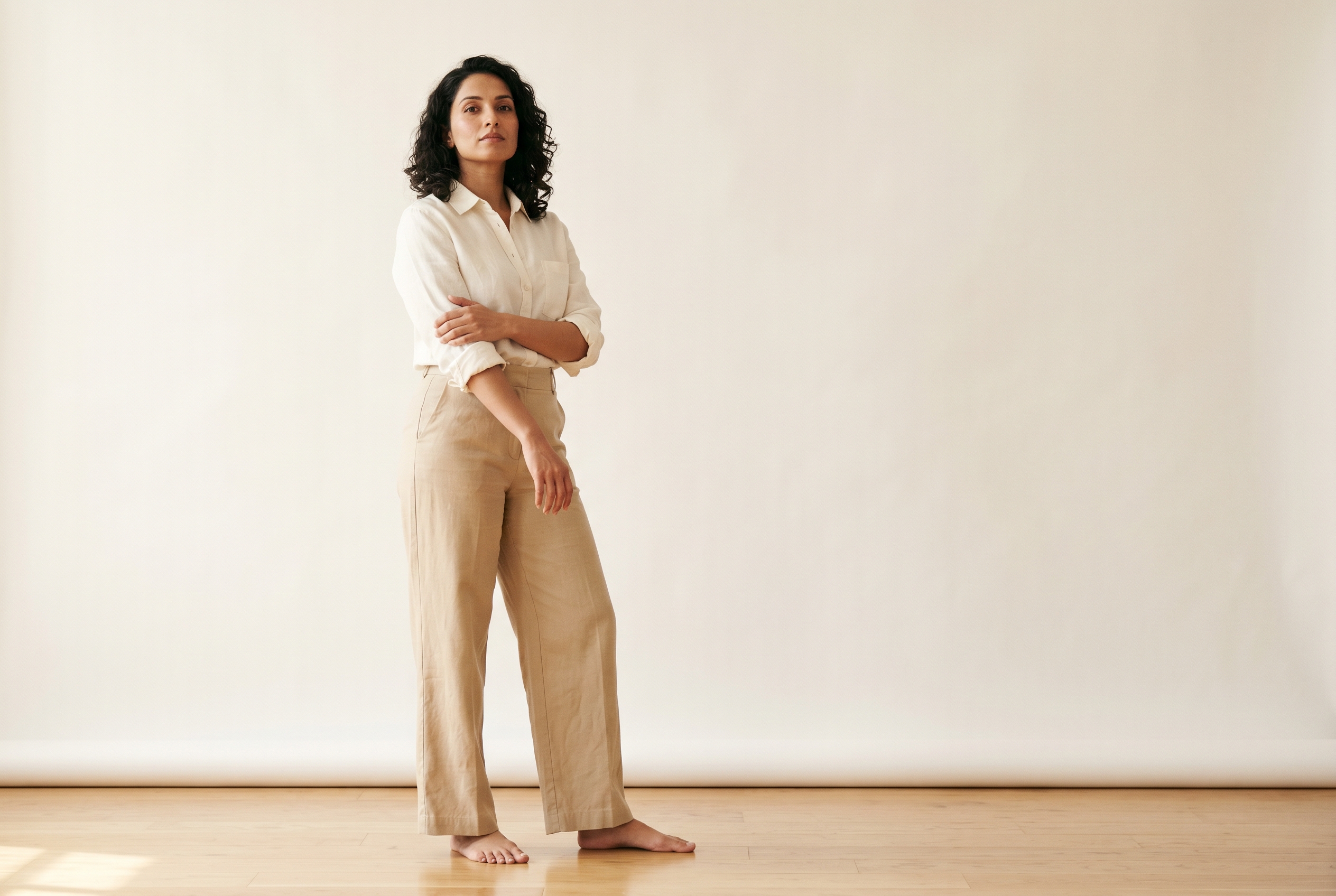
The gap is wide enough that the question for most direct-to-consumer fashion and jewelry brands is no longer whether to use AI, but which AI to use, and where traditional photography still earns its keep.
This guide breaks down the real numbers behind both, the four cost levers most founders forget, and a build-vs-buy decision tree you can run on your own catalog.
The 2026 cost benchmark: traditional vs AI per image
Traditional fashion photography in 2026 averages $150–$1,500 per final retouched image, depending on whether you're shooting flat-lay packshots, ghost-mannequin product shots, or full on-model lifestyle photography. AI alternatives at comparable quality run $0.50–$3.00 per image.
A few orientation points before we go deeper:
- Packshot / flat-lay: $30–$150 per finished image, traditional. AI: $0.50–$1.50.
- Ghost mannequin: $25–$75 per image, traditional. AI: $1–$5.
- On-model lifestyle: $250–$1,500 per finished image with full crew. AI: $1–$3 at 4K.
The variance on the traditional side comes from city (LA and London charge ~40% more than Mumbai or Lisbon), retouching scope, and whether your post-production includes color matching against physical samples.
What you actually pay for in a traditional shoot
A typical "$300 per image" line item in a studio invoice is a blended rate. Underneath it:
- Studio day rate: $800–$3,500
- Photographer: $1,500–$5,000 per day
- Model agency fee + day rate: $750–$3,000 per model
- Stylist + makeup: $400–$1,200 per day
- Retouching: $25–$80 per image, sometimes more for complex garments
- Post-production color match against physical samples: $15–$40 per image
- Reshoots when garments arrive late or look wrong: budget 10–15% of the line
Divide the day's total cost by the number of usable images, subtract reshoots, and you arrive at the $150–$1,500 range. For early-stage DTC brands shipping a 200-SKU collection, this is often a five- or six-figure decision before you've sold a single unit.
AI photoshoot pricing models in 2026
There are three pricing patterns in the market right now, and each one rewards a different kind of buyer.
Per-image flat rate
Tools like ghost-mannequin AI services typically charge $1–$5 per image, billed monthly. Predictable, but punishes brands shooting many variants of the same garment (each color, each angle, each crop is a separate render).
Subscription / unlimited
A handful of AI photo apps offer all-you-can-eat subscriptions at $99–$499/month. Looks cheaper at scale, but read the fine print — most cap monthly renders, throttle 4K, or watermark below a tier.
Pay-as-you-go credits
Newer platforms (Kraftr included) sell renders as credits. A 4K image typically costs around $1–$3 instant, half that in batch mode. No subscription, paid credits never expire (the 10 free signup credits expire 30 days after sign-up — meant for a first test render), no penalty for a slow month. This rewards seasonal brands and anyone running collection drops rather than monthly catalog pushes.
If you're shipping fewer than ~150 images per month, pay-as-you-go almost always wins. Above that, run the math against subscription tiers — but factor in the 50–80% of months you'll be below your cap.
Cost math for 100, 500, and 2,000 SKU catalogs
Assume each SKU needs 6 finished images (3 angles + 2 lifestyle + 1 detail crop). That's the working baseline for a Shopify product page that converts.
| Catalog size | Traditional (mid-range $300/img) | AI fidelity tier ($2/img) | Savings |
|---|---|---|---|
| 100 SKUs / 600 images | $180,000 | $1,200 | 99.3% |
| 500 SKUs / 3,000 images | $900,000 | $6,000 | 99.3% |
| 2,000 SKUs / 12,000 images | $3.6M | $24,000 | 99.3% |
Traditional vs Kraftr
What Indian fashion brands actually spend in 2026. Bars are to-scale against the upper end of the traditional range.
The numbers feel cartoonish until you look at what enterprise fashion has actually done. Zalando reported that ~70% of its Q4 2024 editorial assets were AI-generated, with campaign timelines compressed from 6–8 weeks to 3–4 days and total production costs down ~90%. They aren't using a hobbyist tool — they built a digital-twin pipeline because the cost gap was no longer ignorable.
Where AI still costs you
The per-image price is the headline number, not the only number.
Brand consistency review
A human still has to look at every render before it goes on a product page. Budget 30–60 seconds per image for a junior reviewer, 2–5 minutes per image for hero shots that need brand-team sign-off. At a $25/hour reviewer rate, that's another $0.20–$2.00 per image in soft cost.
Retakes for fidelity drift
Every AI photo platform fails some percentage of renders — wrong garment, distorted print, melted hardware on jewelry. The fidelity-first platforms run failure rates of 3–8% on complex garments. Cheaper variants run 15–30%. If you regenerate, you pay again. This is why fidelity-first models are usually cheaper in practice than they look in the headline price.
Post-production color match
If your product page has to match a physical sample, you'll still pay $15–$40 per image to a colorist. AI does not solve this — but it does compress the rest of the workflow enough that the colorist becomes the only manual step.
When traditional is still worth it
Three scenarios — be honest about whether yours is one of them.
- Campaign hero imagery with a named talent or muse. AI has no answer for "we hired Bella Hadid because the audience knows her."
- Editorial features for press placements where the shoot itself is the story (Vogue, Hypebeast).
- Texture-extreme garments — heavily embellished couture, fully sequined surfaces, transparent organza layered on transparent organza. AI is closing the gap fast, but a human studio still beats it for the top 5% of difficulty.
For everything else — packshots, ghost-mannequin replacements, e-commerce on-model, lifestyle for ads, jewelry on white — AI delivers comparable or better quality at 1–2% of the cost.
Build-vs-buy decision tree for DTC and jewelry brands
A simple flowchart that costs five minutes and saves six figures.
- Do you ship more than 50 SKUs per year? If no, traditional is fine. If yes, continue.
- Are most of your products variant-heavy? (Multiple colors, sizes shown on model, seasonal recolors of the same silhouette.) If yes, AI saves you the most — variants are nearly free.
- Do you need full commercial rights without a model release for every shot? Synthetic models give you that by default. Many AI platforms also embed an invisible SynthID watermark for provenance.
- Do you have an in-house designer or marketer who can review 50–200 images a day? AI requires this taste layer. If you'd rather outsource creative judgment, you'll pay traditional rates regardless.
- Are you running paid ads? If yes, AI is non-negotiable — creative testing requires 20–80 variants per concept, and that's not financially possible at $300/image.
If you answered yes to questions 1, 2, and 5, the math is settled. The remaining question is which AI platform actually preserves your garment.
What "fidelity-first" actually means
Most AI photo tools were built on first-generation diffusion base models. They ship cheap and they distort fabric — weave goes vague, prints smear, embroidery flattens. Fine for a draft. Not fine for a product page that has to match what arrives in the customer's box.
Fidelity-first pipelines — built on top of 2025–2026 frontier image generation — preserve weave, print, trim, and drape with enough accuracy that returns due to "looked different online" stop being a meaningful failure mode.
This is the lever that decides whether your AI photoshoot budget is real savings or borrowed expense. Cheap renders that drive even a 2-point return-rate increase wipe out the cost advantage on a $80 ASP product.
The takeaway
In 2026, AI fashion photography is between 50× and 500× cheaper per image than traditional studio work — and at the fidelity-first tier, the visual gap is closing for everything except top-of-funnel campaign work.
The brands winning this transition aren't the ones using the cheapest AI tool. They're the ones who picked a model that preserves their garment, kept a human review layer in place, and reinvested the savings into shooting more variants, more often, against more concepts.
If you want to see what fidelity-first looks like on your own garments, start a Kraftr shoot — credits are pay-as-you-go, paid credits never expire (the 10 free signup credits expire 30 days after sign-up), and your first 4K renders typically take 60–90 seconds.
Further reading
Frequently asked questions
- How much does a traditional fashion photoshoot cost in 2026?
- Between $150 and $1,500 per final retouched image, depending on whether you're shooting flat-lay packshots ($30–$150), ghost-mannequin product shots ($25–$75), or full on-model lifestyle photography ($250–$1,500 with full crew). Variance comes from city, retouching scope, and whether post-production includes color matching.
- How much does AI fashion photography cost per image?
- $0.50–$3.00 per 4K image at fidelity-first quality, with batch mode typically running at 50% of instant cost. Pay-as-you-go credits suit drop calendars; subscriptions ($99–$499/month) suit monthly catalog refresh — but watch for caps on 4K renders and monthly volume limits.
- Is AI fashion photography good enough for product pages?
- At the fidelity-first tier, yes for 90%+ of typical fashion and jewelry SKUs. Frontier 2025–2026 image models preserve weave, print, trim, and drape accurately enough that returns due to 'looked different online' stop being a meaningful failure mode. Cheaper AI tools built on older base models distort fabric and cost more in returns than they save in production.
- When is traditional photography still worth it over AI?
- Three scenarios: campaign hero imagery with named talent (AI has no answer for celebrity recognition), editorial features for press where the shoot is the story (Vogue, Hypebeast), and texture-extreme garments like fully sequined surfaces or transparent organza layered on transparent organza. For everything else, AI delivers comparable quality at 1–2% of the cost.
- Do I need a model release for AI-generated synthetic models?
- No. Synthetic models give you full commercial rights by default — no model agency fees, no day rates, no licensing per usage. This should be in the standard terms of any AI photoshoot platform, not an upsell. Many platforms also embed an invisible SynthID watermark for provenance, useful for marketplace compliance and brand-safety conversations.
- What is fidelity-first AI photography?
- AI photoshoot platforms built on top of 2025–2026 frontier image generation that preserves weave, print, trim, and drape on real garments. Most older AI photo tools were built on first-generation diffusion base models — they ship cheap and distort fabric. Fidelity-first pipelines accept fine geometric prints, knit ribbing, embroidery, and metallic finishes without drift.
- How much can a 500-SKU catalog save with AI photography?
- At 6 images per SKU (3 angles + 2 lifestyle + 1 detail), 500 SKUs = 3,000 images. Traditional mid-range pricing at $300/image is $900,000. AI fidelity tier at $2/image is $6,000 — a 99.3% reduction. Even after accounting for human review costs (~$0.20–$2.00 per image at $25/hour reviewer rate), the savings remain in the 95%+ range.
About the author
Kraftr is a fidelity-first AI catalog production tool for D2C fashion and jewelry brands selling on Indian marketplaces. We publish marketplace specs and production playbooks based on the rules our customers ship against every week.
More about Kraftr