
Ghost Mannequin Alternative: AI On-Model in 2026
Skip the mannequin and Photoshop comp. See how AI converts flat lay or hanger shots into on-model 4K product photos with full garment fidelity.
Last verified:
Short answer: The fastest ghost mannequin alternative in 2026 is AI on-model photography. Upload a flat-lay or hanger shot of the garment, render it on a synthetic model in 60–90 seconds typical, and ship a 4K image at roughly $1–$3 instead of the $25–$75 a studio charges per ghost-mannequin composite. The catch: only fidelity-first AI models preserve weave, print, and drape well enough for product pages.
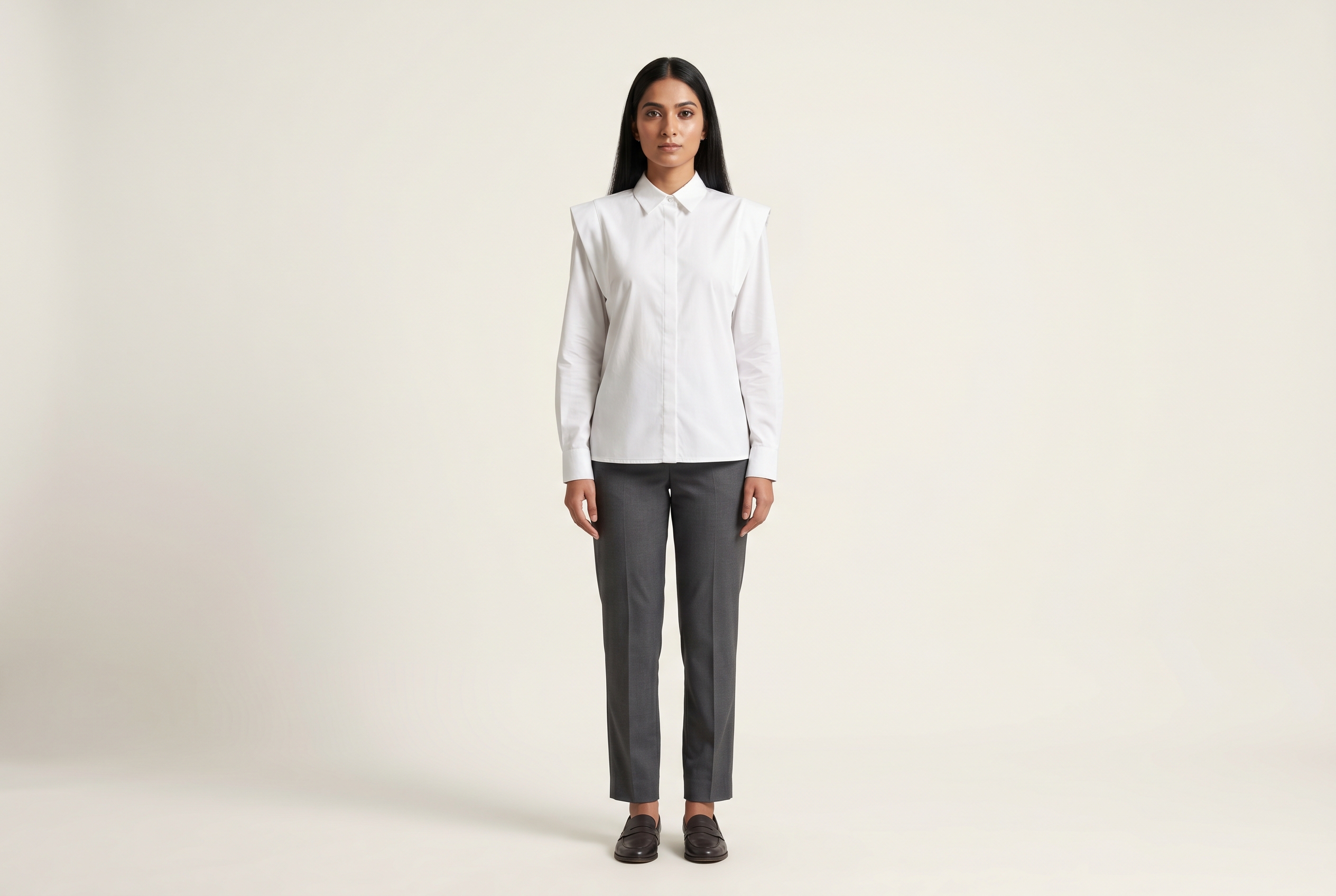
This is the playbook fashion brands are using to retire ghost-mannequin workflows entirely — economics, conversion data, the actual workflow, and a buyer checklist for evaluating any AI photoshoot vendor.
Ghost mannequin vs AI on-model
Which presentation belongs on your catalog — for cost, speed, and marketplace compliance.
- Garment shape visible — no model needed
- Studio + post-production required
- Not allowed on Myntra primary images
- Cost: medium (post-edit required)
- Conversion: lower than on-model
- Real-model context — higher trust
- Same-day turnaround, no studio
- Allowed on every marketplace primary slot
- Cost: low (no post-production)
- Conversion: ~40%+ higher than mannequin
Verdict — for marketplace primary images, AI on-model wins on cost, speed, and compliance. Ghost mannequin still earns a slot in B2B lookbooks and secondary images where the hollow 3D view matters.
Why brands are abandoning ghost mannequin workflows
Ghost mannequin shots — also called invisible mannequin or hollow-man — have been the industry standard for catalog photography for two decades. They're cheap-ish, fast-ish, and produce a clean, repeatable look across a season's drop.
But the workflow has compounding problems:
- The mannequin shoot is half the work. Photographing a garment on a mannequin is the easy part. Producing the final image requires a Photoshop compositor to digitally remove the mannequin, then layer in the inside-back collar from a separate shot. Junior compositors take 20–40 minutes per image; senior ones take 8–15 minutes.
- You can't re-stage. A ghost-mannequin shot freezes the garment in one fit. Want a longer drape? Different sleeve length? Wider collar opening? Reshoot.
- It tests worse than on-model. Customers convert better when they see how a garment falls on a body — but on-model photography costs 5–20× more in a traditional pipeline.
AI on-model breaks the trade-off. The same garment image that fed your old ghost-mannequin pipeline now feeds an AI model that places it on a synthetic person, in any fit, any pose, any background, at 4K.
The hidden cost of traditional ghost mannequin
Headline pricing for ghost mannequin photography in 2026:
- In-house studio with mannequins: $15–$30 per finished image (heavy capital cost upfront)
- Outsourced studio: $25–$75 per image, depending on garment complexity
- AI ghost mannequin tools (first-generation diffusion): $1–$5 per image, but with a meaningful failure rate
Source: Photta's 2026 ghost-mannequin cost comparison.
Layered on top:
- Compositor time: $20–$60 per image at junior-to-senior rates
- Garment prep (steaming, pinning, taping): 10–25 minutes per garment
- Reshoots when collar geometry comes out wrong: 5–10% of total volume
- Logistics: shipping samples to and from the studio, holding inventory in Q4
For a 200-SKU collection at $40 blended cost per image and 4 angles per SKU, that's $32,000 — and a six-to-eight-week production timeline that typically slips.
AI on-model photography: how it actually works
The new workflow has three steps:
- Capture once. Shoot the garment on a hanger, on a flat surface, or yes, even on a mannequin. Phone-quality photos work for AI input — you're feeding the model a fabric reference, not a final image.
- Render on synthetic model. Upload the reference, pick a model, scene, pose, and aspect ratio. The model generates a new 4K image with the synthetic person wearing your garment.
- Review and ship. A human reviewer scans renders for fidelity drift (warped print, melted trim, distorted hardware). Pass-through rate at the fidelity-first tier is 92–97% for typical apparel.
The whole loop takes about 60–90 seconds typical per image at 4K. Batch mode pushes a 500-image catalog through overnight at half cost.
Fidelity test: what AI keeps vs distorts
Not all AI photo tools produce production-ready output. The split is sharp:
What fidelity-first pipelines preserve:
- Weave structure (twill, herringbone, cable knit)
- All-over prints and large logos
- Trim — buttons, zippers, snap closures, contrast stitching
- Drape physics on woven fabrics
- Metal hardware (rings, eyelets, jewelry-grade findings)
What cheaper AI tools (first-generation diffusion variants) routinely distort:
- Fine geometric prints (stripes drift, plaids slip)
- Knit ribbing and gauge
- Embroidery (flattens to printed-on appearance)
- Logo type (letters morph into glyph approximations)
- Metallic finish on jewelry (loses caustic reflections)
This is the single most important purchasing criterion. A cheap AI tool that "saves" 60% per render but distorts 25% of your garments is more expensive than the fidelity-first option. Returns from "looked different online" cost $20–$40 each in reverse logistics, restocking, and lost inventory turn — wiping out the unit-economics savings on the first three returned shipments.
On-model vs flat lay vs ghost mannequin: the conversion data
The conversion-rate data is consistent across published e-commerce studies in 2025–2026:
- On-model lifestyle imagery converts up to 30% better than flat lay for apparel. (Wearview, Improving e-commerce conversion rates.)
- Ghost mannequin sits in the middle — better than flat lay for fit comprehension, worse than on-model for emotional engagement.
- Mixed product pages (1 packshot + 2 on-model + 1 detail) consistently outperform pages that lean on a single style.
The historical reason brands didn't run on-model imagery for every SKU was cost. AI removes the cost constraint. Variants — different model demographics, different scenes for different audiences — become a marketing lever rather than a budget line.
Workflow: flat lay capture → AI on-model → 4K export in under an hour
A repeatable production day for a small DTC brand:
- Steam and lay flat every garment on a clean surface. Phone camera, top-down, even light. 2 minutes per garment.
- Upload references to your AI photoshoot platform. Tag with garment type, color, and any styling notes (sleeve roll, collar open, etc.). 30 seconds per garment.
- Pick a chapter. "Studio packshot," "outdoor lifestyle," "indoor editorial" — pre-built scene presets that lock model, lighting, and background across an entire collection for visual cohesion.
- Render in batch. 500 images overnight at 50% credit cost typically clears in under 8 hours.
- Review the next morning. Reject 3–8% for fidelity drift, regenerate those, and ship.
Total elapsed time for a 50-garment collection: a single afternoon for capture and queue, one overnight batch run, one morning of review. Compare against the 2–4 weeks a traditional ghost-mannequin pipeline takes from sample arrival to shipped images.
Buyer checklist: what to demand from any AI photoshoot vendor
If you're evaluating AI photoshoot tools to retire your ghost-mannequin workflow, the questions that actually matter:
- What model generation? 2025–2026 frontier image generation preserves garment fidelity. First-generation diffusion tools cost less and distort more.
- What output resolution? 4K is the new floor for product imagery. 1024px outputs feel dated and crop poorly into mobile-first product pages.
- What's the failure rate on your garment type? Ask for a free render of three of your hardest pieces — heavy embroidery, fine stripes, metallic jewelry. If they hesitate, the failure rate is high.
- Can you run batch? A platform that only renders one image at a time is fine for prototypes, useless for catalogs. Batch mode at 50% cost with a 24-hour SLA is now standard.
- Who owns the renders? Full commercial rights, no model releases, no licensing fees per usage — this should be in the standard terms, not an upsell.
- Is there provenance? SynthID watermarking gives you invisible, audit-ready proof that an image was AI-generated. Useful for marketplace compliance and brand-safety conversations.
- Pricing model fit? Pay-as-you-go credits suit drop calendars; subscriptions suit monthly catalog refresh. Match to your actual production cadence, not the platform's.
The honest take
AI on-model is not a strict superset of ghost-mannequin yet. There are still garments where a physical mannequin shot remains the highest-fidelity option — fully sequined surfaces, complex transparent layering, garments that need a precise dimensional shape. But that set is small, and shrinking each model release.
For 90%+ of the catalog at a typical fashion or jewelry e-commerce brand, AI on-model gives you better imagery, faster, at 5–10% of the cost. The remaining 10% is where you spend your traditional photography budget.
If you want to A/B test fidelity on your own pieces before committing, Kraftr offers pay-as-you-go credits — first 4K renders land in 60–90 seconds typical, no subscription, no model releases needed.
Further reading
Frequently asked questions
- What is the cheapest alternative to ghost mannequin photography?
- AI on-model photography. Upload a flat-lay or hanger shot, render it on a synthetic model in 60–90 seconds typical, and ship a 4K image for roughly $1–$3 — compared to $25–$75 per ghost-mannequin composite from a traditional studio. The catch: only fidelity-first AI models preserve weave, print, and drape well enough for product pages.
- Does AI on-model photography work for jewelry?
- Yes for most pieces. Fidelity-first models preserve metallic finishes, stone caustics, and hardware accurately. The harder cases are fully sequined surfaces and transparent organza layered on transparent organza — those still favor a traditional studio shoot. For 90%+ of typical jewelry SKUs, AI on-model delivers production-ready output.
- How much does AI on-model photography cost vs ghost mannequin?
- AI on-model: $1–$3 per 4K image, no studio day rate, no compositor time. Traditional ghost mannequin: $25–$75 per finished image (outsourced) or $15–$30 (in-house studio with capital cost). For a 200-SKU collection at 4 angles per SKU, that's the difference between ~$2,000 and $32,000.
- Will an AI render distort the print or weave of my garment?
- Depends on the AI pipeline. Fidelity-first platforms preserve twill, herringbone, cable knit, all-over prints, large logos, trim, and drape physics. Older AI tools (built on first-generation diffusion base models) routinely distort fine geometric prints, knit ribbing, embroidery, and metallic finishes. Ask any vendor for a free render of your three hardest pieces before committing.
- Can I use AI on-model images for Amazon and Myntra listings?
- Yes. Amazon allows AI imagery as of 2026 provided it accurately represents the physical product. Myntra Studio rolled out generative-image acceptance in 2025 under the same 3:4 portrait, gender-match, full-length rules as traditional photography. Both enforce garment fidelity — distorted prints or melted hardware get caught at QC.
- Do I need a human reviewer in the AI on-model workflow?
- Yes. Budget 30–60 seconds per image for a junior reviewer on standard catalog work, and 2–5 minutes per image for hero shots needing brand-team sign-off. Fidelity-first platforms run failure rates of 3–8% on complex garments — cheaper variants run 15–30%. The reviewer catches the misses before they ship.
- How long does AI on-model production take for a 50-garment collection?
- A single afternoon for capture (steam, lay flat, phone photos), one overnight batch run at 50% credit cost, and one morning of review. Compare against the 2–4 weeks a traditional ghost-mannequin pipeline takes from sample arrival to shipped images.
About the author
Kraftr is a fidelity-first AI catalog production tool for D2C fashion and jewelry brands selling on Indian marketplaces. We publish marketplace specs and production playbooks based on the rules our customers ship against every week.
More about Kraftr