
AJIO Seller Image Guidelines & Photo Specs (2026)
AJIO seller image specs: 3:4 portrait, 1,500×2,000 px, JPEG, #FFFFFF primary, on-model required. AJIO Luxe rules, Myntra dual-listing workflow, and rejection traps.
Last verified:
Short answer: AJIO uses a 3:4 portrait aspect ratio, recommends 1,500 × 2,000 px for hero images, JPEG at quality 85–95, and pure white #FFFFFF on the primary slot — the spec sheet sits very close to Myntra's. The platform requires a gender-matched, full-length on-model frame in the primary slot for fashion, with at least four supporting slots covering back, side, detail, and look-shot. AJIO Luxe, Reliance's premium sub-channel, applies a stricter bar: higher minimum resolution (2,000 × 2,667 px+), editorial lighting, and heavier lifestyle expectations.
This is the verified 2026 spec sheet for AJIO sellers — built for fashion brands who are already on Myntra and evaluating Reliance's storefront as the second listing channel. For the Myntra companion guide, see Myntra Image Size & Guidelines (2026). For the cross-platform matrix that puts AJIO, Myntra, Amazon, and Flipkart side by side, see Marketplace Product Photo Specs 2026.
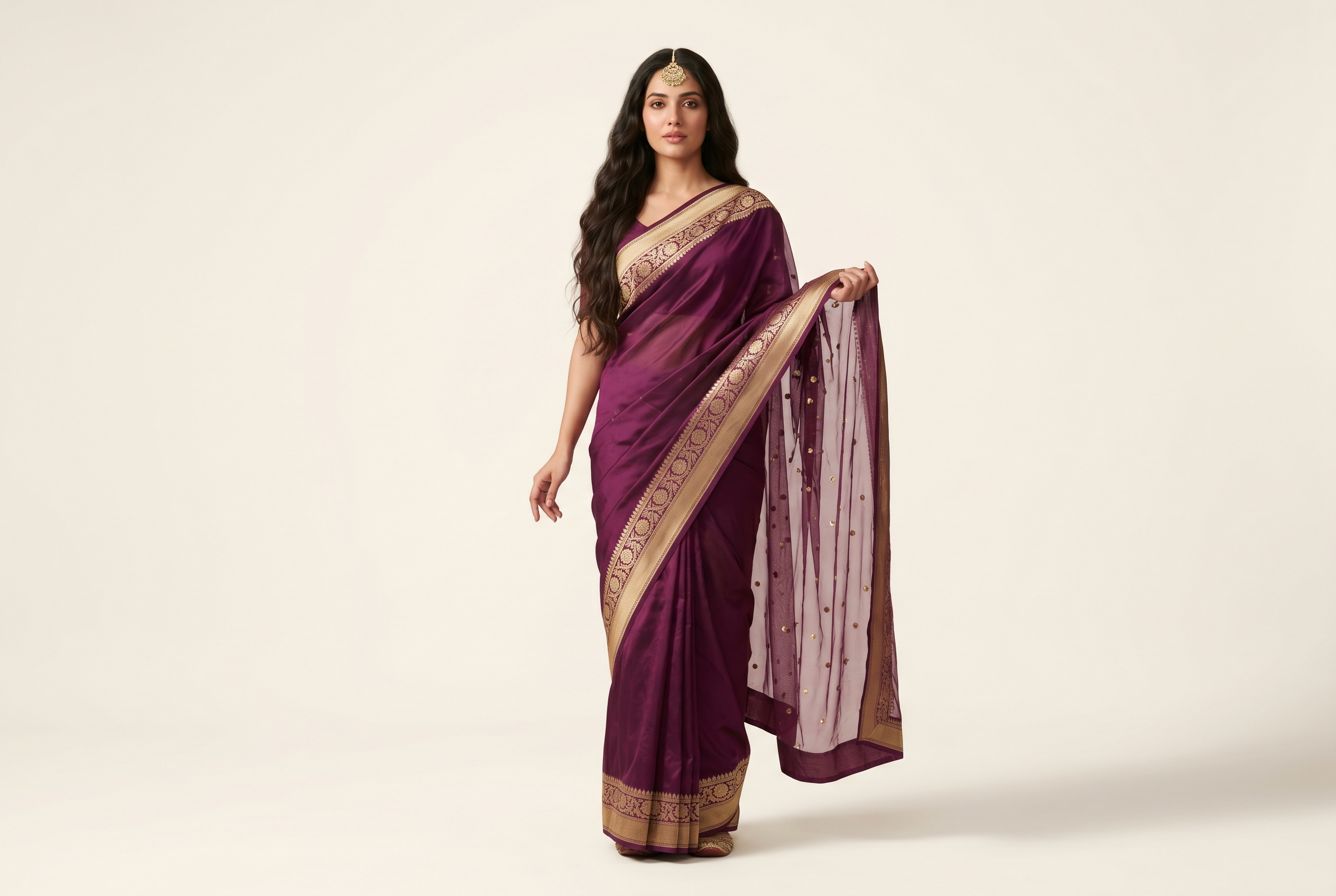
Why AJIO matters for mid-premium fashion
AJIO is Reliance Retail's fashion vertical and the storefront that most directly competes with Myntra on mid-premium positioning. The catalog leans into curated brands, designer-led collections, and a growing private-label business, with AJIO Luxe carved out as the premium sub-channel for designer and international labels. For an Indian fashion brand already selling on Myntra, AJIO is the obvious second channel — overlapping customer base, overlapping size charts, overlapping shoot conventions.
The cross-platform reality matters because Reliance is rolling group integrations across JioMart, Tira, and AJIO. Catalog data and imagery prepared for one Reliance surface increasingly need to be portable to the others. Brands that build their shoot pipeline around a single channel pay for the rebuild twice.
Core technical specs
| Field | Standard AJIO | AJIO Luxe |
|---|---|---|
| Min dimensions | 1,080 × 1,440 px (3:4) | 2,000 × 2,667 px (3:4) (unverified — confirm in Partner Portal) |
| Recommended | 1,500 × 2,000 px hero | 2,400 × 3,200 px hero |
| Aspect ratio | 3:4 portrait | 3:4 portrait |
| File format | JPEG, quality 85–95 | JPEG, quality 90+ |
| Max file size | ~2 MB per image (unverified) | ~3 MB per image (unverified) |
| Color space | sRGB | sRGB; AdobeRGB tolerated on master files |
| Background (primary) | #FFFFFF | #FFFFFF or editorial context per category |
| Background (alternates) | Light grey with soft shadow | Editorial / lifestyle |
| Image count (apparel) | Min 4–5 | 6+ recommended |
| Model policy | Gender-matched, full-length, on-model | Gender-matched, editorial-grade on-model |
| AI imagery | Allowed if accurate | Allowed; tighter fidelity bar |
Sources: AJIO Partner Portal (gated; partners.ajio.com / seller.ajio.com). AJIO Luxe vendor onboarding decks (gated). Secondary references: Reliance Retail seller communications via partner-onboarding documentation, Lohar Studio — AJIO photography guidelines, and category SKU template mirrors. (Several exact numbers above are marked unverified — AJIO's seller documentation is more gated than Myntra's, and the figures should be confirmed in the Partner Portal before bulk uploads.)
AJIO vs AJIO Luxe image specs
The two tiers share the 3:4 portrait shape, but Luxe pushes resolution, model casting, and slot count higher.
- Aspect ratio
- 3:4 portrait
- Min size
- 1500×2000 px
- Background
- White seamless
- Model
- Live model — required
- Slot count
- 4–5 images
- Aesthetic
- Clean contemporary editorial
- Aspect ratio
- 3:4 portrait
- Min size
- 2000×2667 px
- Background
- White or premium textured neutral
- Model
- Editorial casting standard
- Slot count
- 6–8 images
- Aesthetic
- High-fashion editorial — premium
- No watermarks, text overlays, or logos
- No composite images on the primary slot
- Gender-matched model required
Why 3:4 and why 1:1 fails on AJIO
AJIO's product detail page, like Myntra's, is built mobile-first around a 3:4 hero crop. A 1:1 square gets either rejected at QC or auto-cropped in ways that lose the bottom hem of the garment — the part buyers most need to see for dresses, kurtas, and trousers. Sellers porting Amazon catalogs (where 1:1 is the de facto standard) lose listings on AJIO for exactly this reason.
The fix is the same as it is on Myntra: capture or render your master at 3:4 from the start. Anything else costs you a re-export or a re-shoot — and on the dual-listing workflow with Myntra, you'd be doing that work twice.
The AJIO apparel slot sequence
AJIO expects a minimum of four to five images per fashion SKU. Each slot has a specific job, and the sequence closely mirrors Myntra's five-slot template — which is the operational point: one shoot, two compliant outputs.
Slot 1 — Front on-model (primary)
- Background: Pure white #FFFFFF.
- Model: Gender-matched human or synthetic; age-appropriate for the category.
- Framing: Full-length preferred; head to mid-thigh is the minimum.
- Pose: Standing, neutral, garment clearly visible front-on.
- Lighting: Soft, even, no harsh shadows on the garment.
Slot 2 — Back on-model
- Background: Light grey with soft shadow (AJIO follows the same house-standard pattern as Myntra for secondary slots).
- Model: Same model as slot 1 for continuity.
- Framing: Match the framing of slot 1.
- Pose: Standing, back to camera. Show construction — yokes, vents, back zips, decorative trims.
Slot 3 — Side or three-quarter on-model
- Background: Light grey with soft shadow.
- Framing: Three-quarter view (45°) is generally preferred over a strict profile.
- Purpose: Communicate drape, silhouette, and garment depth.
Slot 4 — Detail / zoom
- Background: Light grey or very tight crop on garment.
- Subject: Fabric weave, print at scale, embroidery, trim, hardware.
- Framing: Close-up; garment fills the frame.
- Why it matters: Returns spike when slot 4 is missing or low-quality — buyers can't trust the fabric without it.
Slot 5 — Styled look-shot (recommended; required on Luxe)
- Background: Light grey or in-context lifestyle (categories vary).
- Model: Same or different — show the garment styled with complementary pieces.
- Purpose: Conversion lift, especially on AJIO Luxe where buyers expect editorial framing.
Footwear, accessories, and jewelry have their own category-specific slot maps. Confirm in the relevant AJIO SKU sheet before shooting.
AJIO Luxe — what's different at the premium tier
AJIO Luxe is Reliance's premium fashion sub-channel — the home of designer labels, international brands, and the higher AOV catalog. The image bar is meaningfully tighter than standard AJIO:
- Higher minimum resolution. 2,000 × 2,667 px (3:4) is a safe floor; 2,400 × 3,200 px is the recommended hero target. (Unverified — confirm in Luxe vendor onboarding.)
- Editorial lighting is expected. Flat, even catalog lighting reads as "mass market" to Luxe QC. Directional, key-and-fill setups with intentional shadow work read as "premium."
- On-model is effectively required. Ghost mannequin renders that pass on standard AJIO routinely get bounced from Luxe.
- Lifestyle context counts. Where the standard storefront tolerates a clean 4-slot sequence on white and grey, Luxe expects 6+ frames including a lifestyle or location-based look-shot.
- Fidelity bar is tighter. AI-generated imagery is allowed, but pattern drift that would pass standard AJIO QC will get caught on Luxe — particularly on hand-block prints, jacquards, and embroidery.
For brands listing across both tiers, the operational answer is to shoot or render at the Luxe spec and downsize for standard AJIO. Never the other way around.
AJIO vs Myntra — the dual-listing spec delta
| Field | AJIO (standard) | Myntra |
|---|---|---|
| Aspect ratio | 3:4 portrait | 3:4 portrait |
| Min dimensions | 1,080 × 1,440 px | 1,080 × 1,440 px |
| Recommended hero | 1,500 × 2,000 px | 1,500 × 2,000 px |
| Primary background | #FFFFFF | #FFFFFF |
| Alternate background | Light grey + soft shadow | Light grey + soft shadow |
| Model policy | Gender-matched, full-length | Gender-matched, full-length |
| Image count | Min 4–5 | Min 5 |
| File format | JPEG q85–95 | JPEG q85–95 |
| AI imagery | Allowed if accurate | Allowed via Myntra Studio |
| Strictness | Comparable | Slightly stricter on gender-match auto-flags |
The headline finding: AJIO and Myntra spec sheets sit close enough that a single shoot day, planned correctly, satisfies both. The deltas are small — Myntra's gender-match auto-flagging is more aggressive, Myntra requires the fifth look-shot more strictly, and AJIO Luxe is its own tier above both. For brands optimizing budget across the two largest fashion marketplaces in India, this is the single most important fact about the production pipeline.
What changed in 2024–2026
Three shifts matter for AJIO sellers right now.
AI imagery acceptance. AJIO confirmed in 2025 that AI-generated imagery is allowed on listings provided it accurately represents the physical garment — same bar applied to traditional photography. Standard AJIO QC catches obvious pattern drift; AJIO Luxe applies a tighter fidelity check. Frontier image models that embed SynthID watermarks give brands audit-ready provenance, which the platform increasingly cares about.
HD prioritization. AJIO's catalog search ranking now weights image resolution explicitly. Listings with hero images at 1,500 × 2,000 px or higher rank ahead of equivalent sub-1,200-px listings on Fashion category browse pages (unverified — pattern confirmed by partner communications; no published ranking doc).
Reliance group integration. Catalog data and imagery prepared for AJIO is increasingly portable to JioMart Fashion and Tira (Reliance's beauty vertical, with growing fashion adjacencies). A brand that builds for AJIO today gets readier-than-ever portability across the rest of the Reliance group surfaces. Conversely, brands that ignore the 3:4 / on-model / white-primary discipline pay to rebuild it across three or four storefronts later.
Common rejection reasons on AJIO
In rough order of how often they kill submissions:
- Wrong aspect ratio. 1:1 instead of 3:4 — the single most common error for sellers porting from Amazon.
- Sub-minimum resolution. Anything below 1,000 × 1,200 px tends to auto-reject; under 1,500 × 2,000 px competes poorly on Fashion browse.
- Wrinkled garment. Steam every garment before shooting; AJIO QC flags this aggressively.
- Color cast. Mismatched white balance between slots, or a primary that drifts off neutral.
- Visible mannequin. Either remove or use on-model — no exceptions in the primary slot.
- Headless or cropped model in primary. Move headless shots to the detail slot instead.
- Lifestyle props in primary. Bags, sunglasses, hats not part of the SKU should be removed.
- Blur. Especially on detail slots; AJIO Luxe rejects soft focus on close-ups.
- Off-white primary background. Save the grey for slots 2–5.
- Model gender mismatch. Less aggressively auto-flagged than on Myntra, but still caught at human QC.
The dual-listing workflow — one shoot, two compliant outputs
This is where the production-pipeline conversation actually moves. Most Indian fashion brands evaluating AJIO are already on Myntra and don't have the budget for two separate shoot days. The spec deltas above are small enough that a single shoot, planned correctly at 3:4 / on-model / 1,500 × 2,000+ / white-primary, satisfies both platforms.
What overlaps:
- Master capture aspect ratio (3:4).
- Master resolution target (2,000 × 2,667 px gives you headroom for both).
- Model selection (gender-matched, full-length, on-white primary).
- Alternate-slot styling (light grey with soft shadow).
- File format (JPEG q85–95, sRGB).
What differs:
- Slot count. Myntra wants 5; AJIO standard tolerates 4. Plan for 5 — you'll use them on AJIO Luxe anyway.
- Auto-flagging strictness. Myntra's catalog AI flags gender mismatches and resolution drops more aggressively than AJIO's. If your master clears Myntra QC, it almost always clears AJIO.
- AJIO Luxe tier. Adds a meaningful step up in resolution, lighting, and lifestyle context. Don't try to retrofit Luxe from standard AJIO masters — shoot at the Luxe bar and downsize.
Brands listing on AJIO and Myntra in parallel use tools like Kraftr to render the same garment across both channels at their respective specs — same source flat-lay, same brand consistency, two compliant outputs. See the Myntra listings use case for the production-pipeline walkthrough, and about Kraftr and pricing for how the fidelity-first pipeline handles the dual-channel render.
For the Amazon companion (which sits in a different spec universe — 1:1 squares, ghost mannequin tolerated), see Amazon Apparel & Jewelry Photo Requirements 2026.
Pre-flight checklist for AJIO uploads
[ ] Aspect ratio = 3:4 portrait
[ ] Resolution ≥ 1,500 × 2,000 (standard hero) or ≥ 2,000 × 2,667 (Luxe hero)
[ ] JPEG, quality 85–95 (90+ for Luxe)
[ ] sRGB color profile embedded
[ ] File size ≤ 2 MB (≤ 3 MB for Luxe)
[ ] Slot 1: pure white #FFFFFF, full-length, gender-matched model
[ ] Slots 2–4: light grey with soft shadow, same model, back / side / detail
[ ] Slot 5: styled look-shot (required on Luxe)
[ ] No headless or cropped-above-shoulder shots in slot 1
[ ] Garment steamed; no visible wrinkles
[ ] No mannequin visible in any slot
[ ] No off-SKU props (bags, hats, sunglasses) in primary
[ ] Detail slot: sharp focus, fabric texture readable
[ ] Color consistency across all slots
Jewelry on AJIO
Jewelry sits under accessories on standard AJIO and gets meaningfully more lifestyle latitude on AJIO Luxe. The category-specific slot map differs from apparel:
- Necklaces and earrings typically require an on-bust or on-model frame in the supporting slots, with a product-only shot on white as the primary.
- Hallmark, certification, and packaging frames are appropriate alternates.
- AJIO Luxe expects editorial jewelry imagery — soft directional lighting, dark or textured backdrops in alternates, lifestyle styling.
The exact jewelry SKU template was not directly accessed for this guide. (Unverified — confirm in the AJIO accessories SKU template before shooting jewelry catalogs.)
What to do this week
- Audit one Myntra-bestseller listing against the AJIO spec. If your Myntra hero clears the matrix above (3:4 / 1,500 × 2,000 / white primary / gender-matched model), you're ready to dual-list. The remaining work is slot ordering and AJIO-specific metadata.
- Confirm exact file-size and Luxe resolution caps in the AJIO Partner Portal. Several numbers in this guide are marked unverified because Reliance's seller documentation is gated — confirm before bulk uploads.
- Plan your next shoot at the Luxe bar. 2,000 × 2,667 px, editorial lighting, 6+ frames. Downsize for standard AJIO and Myntra. Never upsize.
- Build the dual-listing pipeline once. Same source master, two compliant outputs. If you're rendering rather than re-shooting, run a small test batch on a non-bestseller SKU first and watch QC turnaround before scaling.
- Keep your source files. Each Reliance group surface (AJIO, AJIO Luxe, JioMart, Tira) is iterating its spec sheet every 12–18 months. You will re-export.
Further reading
- Myntra Image Size & Guidelines (2026) — the dual-listing sibling guide
- Marketplace Product Photo Specs 2026 — Amazon, Myntra, Flipkart, Shopify side by side
- Amazon Apparel & Jewelry Photo Requirements 2026 — the other major spec universe
- Myntra listings — production pipeline walkthrough
- About Kraftr · Pricing
Frequently asked questions
- What is the AJIO seller image size requirement?
- AJIO recommends a 3:4 portrait at 1,500 × 2,000 px for hero placements, with a working minimum around 1,080 × 1,440 px. AJIO Luxe pushes higher — 2,000 × 2,667 px or larger is the safe target for the premium tier. Anything below 1,000 × 1,200 px tends to get auto-rejected at QC.
- What aspect ratio does AJIO require for fashion product photos?
- AJIO uses a 3:4 portrait aspect ratio for fashion catalog images on the product detail page, mirroring Myntra's standard. Submitting a 1:1 square gets auto-cropped on mobile and is the single most common reason ported Amazon catalogs fail AJIO QC.
- What file format does AJIO accept for product images?
- JPEG at quality 85–95 with an sRGB color profile embedded. File size target is roughly 2 MB per image *(unverified — confirm in the AJIO Partner Portal before bulk uploads)*. PNG is sometimes accepted for transparency edge cases but JPEG is the production standard for listing slots.
- Does AJIO allow AI-generated product images?
- Yes, AJIO accepts AI-generated imagery in 2026 provided it accurately represents the physical garment — same accuracy bar as the platform applies to traditional photography. Pattern drift on prints, distorted hardware, or fabric misrepresentation gets caught at QC. AJIO Luxe applies a tighter fidelity bar.
- How is AJIO Luxe different from standard AJIO?
- AJIO Luxe is the premium sub-channel and applies stricter standards: higher minimum resolution (2,000 × 2,667 px+), editorial-grade lighting, on-model is effectively required, and lifestyle/look-shot expectations are heavier than on the standard storefront. QC turnaround is also slower because more frames are human-reviewed.
- Can I use the same shoot for AJIO and Myntra?
- Largely yes. Both platforms share the 3:4 portrait, on-model, white-primary, gender-matched conventions for fashion. The same source flat-lay or on-model master can drive both channels. The deltas show up in slot count, alternate-slot styling, and the AJIO Luxe premium tier — plan one shoot, render two compliant outputs.
- What are the most common AJIO image rejection reasons?
- Wrong aspect ratio (1:1 instead of 3:4), sub-1,000 px resolution, wrinkled garments, color cast between slots, visible mannequins, headless or cropped-above-shoulder models in the primary slot, off-SKU props, and blur. AJIO Luxe additionally rejects soft focus on detail shots.
- Does AJIO require on-model shots for jewelry?
- Jewelry on AJIO typically requires an on-bust, on-hand, or on-model frame in the supporting slots, with a product-only shot on white as the primary. AJIO Luxe leans heavier on lifestyle and on-model jewelry imagery than the standard storefront. *(Unverified — confirm in the AJIO accessories SKU template before shooting jewelry catalogs.)*
- How many images does AJIO require per SKU?
- AJIO expects a minimum of 4–5 images per fashion SKU: front on-model, back on-model, side or three-quarter, fabric or trim detail, and (where applicable) a styled look-shot. AJIO Luxe pushes for 6+ frames including lifestyle context. *(Unverified — confirm in the Partner Portal SKU sheet.)*
- Does AJIO allow ghost mannequin images?
- Ghost mannequin renders are tolerated in some category sheets but disfavored on AJIO — the editorial direction, like Myntra, is on-model first. Visible mannequins are prohibited across all slots. For apparel, plan on a gender-matched real or synthetic model in the primary slot.
About the author
Kraftr is a fidelity-first AI catalog production tool for D2C fashion and jewelry brands selling on Indian marketplaces. We publish marketplace specs and production playbooks based on the rules our customers ship against every week.
More about Kraftr