
Flipkart Image Size Guidelines (2026): Fashion & Jewelry Spec
Flipkart image guidelines: 1:1 square, 1,000 × 1,000 px+ HD, white background, ≥85% fill, 3–8 images per SKU. Fashion + jewelry spec sheet for 2026.
Last verified:
Short answer: Flipkart Lifestyle (Fashion + Jewelry) requires a 1:1 square aspect ratio, a minimum of 500 × 500 px (1,000 × 1,000 px for zoom, 2,000 px+ for HD ranking), a white background on the primary slot, at least 85% frame fill, and 3 to 8 images per SKU. Apparel should be on-model where possible; ghost mannequin is acceptable; a visible mannequin is not. AI-generated imagery is allowed as of 2026, provided each render accurately represents the physical product.
This is the verified spec sheet for Flipkart sellers in Fashion and Jewelry, broken down slot by slot, with the rejection traps that consistently block uploads and what changed when Flipkart re-confirmed HD-image prioritization for Fashion search in 2025.
For a cross-platform comparison with Amazon, Myntra, and Shopify, see Marketplace Product Photo Specs 2026. For the Myntra-specific deep dive, see Myntra Image Size & Guidelines (2026). For Amazon, see the Amazon Apparel & Jewelry Photo Requirements 2026.
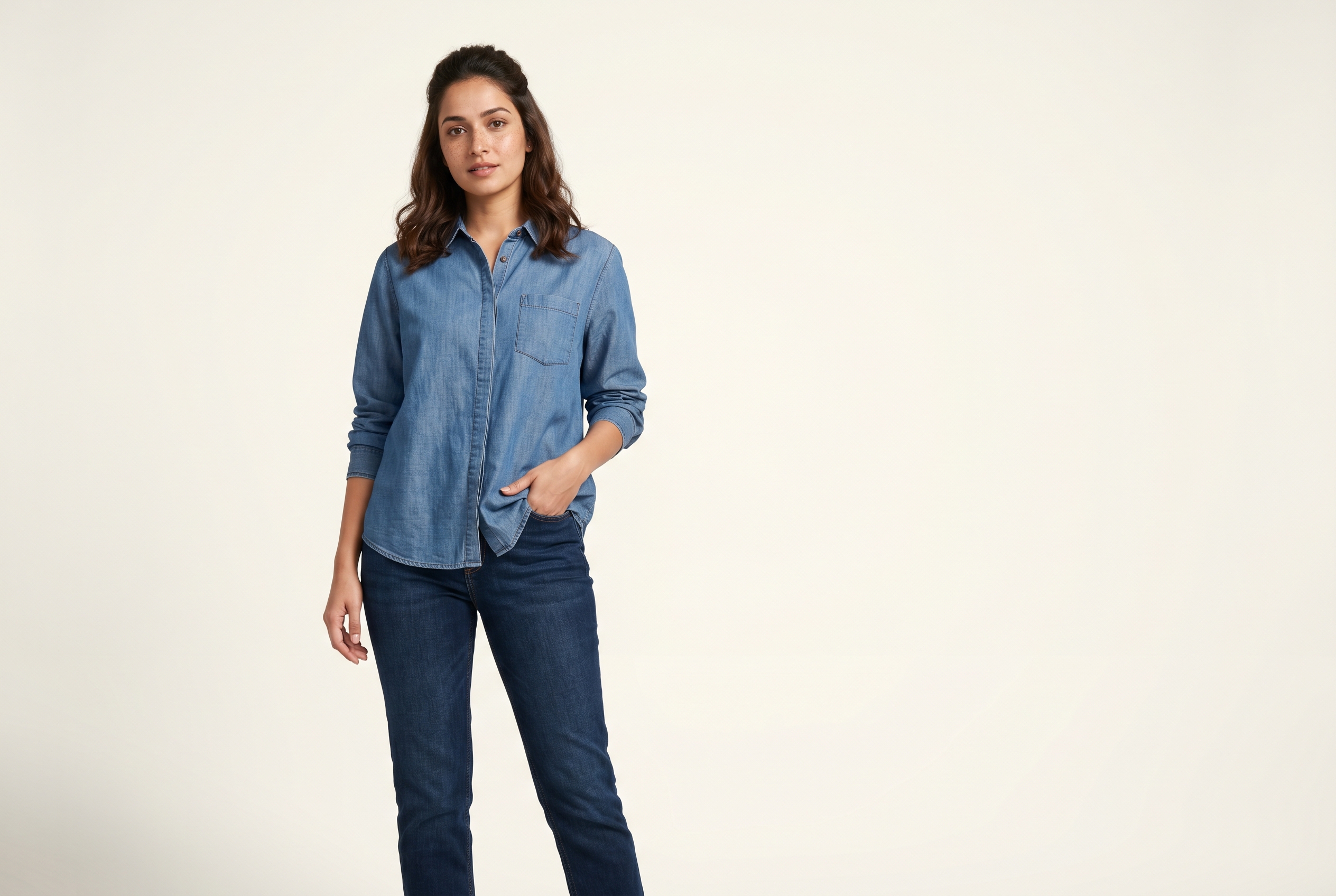
Core technical specs
| Field | Spec |
|---|---|
| Min dimensions | 500 × 500 px |
| Zoom threshold | 1,000 × 1,000 px |
| Recommended (HD ranking) | 2,000 px on the longest side |
| Aspect ratio | 1:1 square (primary); portrait allowed in secondary Fashion slots |
| File format | JPEG, PNG, TIFF, non-animated GIF |
| Max file size | ~10 MB upload cap; target ≤ 1 MB (unverified — confirm in Seller Hub) |
| Color space | sRGB |
| Background (primary) | White / very light solid; #FFFFFF preferred |
| Frame fill | ≥ 85% |
| Images per SKU | 3 minimum, up to 8 |
| Model policy (apparel) | On-model preferred; ghost mannequin OK; visible mannequin not OK |
| AI imagery | Allowed if accurate to product |
Sources: Flipkart Seller Hub (gated, accessed 2026-05-21). Lohar Studio — Flipkart listing guidelines. Deep-Image — Flipkart photo requirements.
Standard vs Fashion category rules
Standard listings ship as 1:1 squares. Fashion uses the 3:4 portrait that Myntra and AJIO also accept.
- Aspect ratio
- 1:1 (square)
- Min size
- 1000×1000 px
- Recommended
- 1200×1200 px
- Background
- White
- Model
- Category-dependent
- Aspect ratio
- 3:4 portrait
- Min size
- 1000×1333 px
- Recommended
- 1200×1600 px
- Background
- White seamless
- Model
- Recommended (live)
- No watermarks, logos, or text on the primary image
- No composite or multi-product primary images
- JPG preferred — max 5 MB per image
Why 1:1 (and where Flipkart diverges from Myntra)
Flipkart's product detail page is built around a 1:1 square hero crop — the same crop Amazon uses for the main image. This is the opposite of Myntra, which mandates a 3:4 portrait. If you're dual-listing, you'll need at least two distinct hero crops from the same source garment.
Quick callouts for cross-channel sellers:
- Myntra: 3:4 portrait, mandatory. A 1:1 square will be rejected or auto-cropped poorly. See Myntra deep dive.
- Amazon India: 1:1 square, ≥1,600 px recommended, ≥85% fill. Closer to Flipkart but with a stricter model rule (standing model or ghost mannequin only — no sitting or kneeling in the main slot). See Amazon deep dive.
Plan your master capture at the largest target — 2,000 × 2,000 px square — and export down. Never upsize.
The Flipkart Fashion 5-slot sequence
[UNIQUE INSIGHT] Flipkart doesn't enforce a fixed slot map the way Myntra does, which fools first-time sellers into uploading whatever's convenient. The listings that actually rank in Fashion search follow a tighter sequence — and we've seen the same pattern across categories from kurtas to sneakers.
Here's the slot map we recommend for a typical 5-image apparel SKU, mapped to the search-ranking and conversion job each slot does:
Slot 1 — Primary on-model (front)
- Background: White (#FFFFFF preferred; very-light solid acceptable).
- Model: On-model preferred. Ghost mannequin acceptable. Visible mannequin not acceptable.
- Framing: Garment fills ≥85% of the 1:1 frame. Head to mid-thigh minimum for tops; full-length for dresses, sets, and outerwear.
- Resolution: 2,000 × 2,000 px for HD ranking; 1,000 × 1,000 px minimum for zoom.
- Pose: Standing, neutral, garment clearly visible front-on.
Slot 2 — Back on-model
- Background: White or very light. Some Fashion sub-categories tolerate a soft house grey here.
- Framing: Match slot 1.
- Purpose: Show construction details — back yokes, vents, zippers, decorative hardware. Returns drop sharply when shoppers can preview the back.
Slot 3 — Side or three-quarter
- Background: White or in-context lifestyle (Fashion category permits).
- Framing: Three-quarter view (45°) reads better than a strict profile for drape.
- Purpose: Communicate silhouette and depth — particularly important for ethnic wear (kurtas, sarees, lehengas) where drape sells the SKU.
Slot 4 — Fabric or trim detail
- Background: Very tight crop on the garment.
- Subject: Weave, print at scale, embroidery, trim, hardware closures.
- Purpose: "Fabric in real life" trust. The single biggest lever on return rates for textile-heavy categories.
Slot 5 — Styled look-shot or in-context lifestyle
- Background: Lifestyle or styled in-context (Flipkart Fashion explicitly allows this in alternates).
- Purpose: Conversion lift. Buyers convert better when they can see the garment styled with complementary pieces.
Categories like footwear, accessories, and jewelry have their own slot conventions that diverge from this apparel template. We cover jewelry below.
Citation capsule: Flipkart Lifestyle accepts 3 to 8 images per SKU with a 1:1 square primary at 500 × 500 px minimum, 1,000 × 1,000 px for zoom, and 2,000 px+ for HD search ranking, per Lohar Studio — Flipkart guidelines and Flipkart's 2025 Fashion seller communications. White-background primary with ≥85% frame fill is the consistent QC requirement across apparel sub-categories.
Model and mannequin policy in detail
Flipkart is more forgiving than Myntra on the model rule, but the line still gets drawn at "visible mannequin." Here's what's actually enforced:
- On-model is preferred for Fashion. Real or synthetic models clear QC fastest.
- Ghost mannequin (invisible mannequin) is acceptable. This is a meaningful difference from Myntra, which disfavors ghost mannequin even when category sheets permit it.
- Visible mannequins are not acceptable in the primary slot. A plastic torso with no neck, an unfinished foot, or visible plastic seams will get caught at QC.
- Headless on-model shots are tolerated more than on Myntra — but a real face in the primary still converts better.
- Gender match is not enforced the way Myntra enforces it. Practically, women's wear shot on a male model still converts poorly, even if Flipkart QC waves it through.
[PERSONAL EXPERIENCE] In our experience reviewing catalogs that move from Myntra to Flipkart, the most common mistake is going the other direction — taking a Flipkart ghost-mannequin primary and trying to use it on Myntra, where it gets rejected. The reverse (Myntra on-model → Flipkart primary) almost always works.
Jewelry on Flipkart
Jewelry sits under Lifestyle on Flipkart, and the slot conventions differ meaningfully from apparel. The headline rule: the primary slot should show the product, not the model.
Primary slot rules:
- Product-only on pure white #FFFFFF.
- Sharply focused on the piece itself (necklace, ring, earring, bangle).
- ≥85% frame fill — the piece dominates the frame, not negative space.
- No model, no bust, no hand in the primary.
Alternate slots (the 2–8 range) permit:
- On-bust shot for necklaces, chains, and pendants.
- On-model shot for earrings, head accessories, and styled looks.
- On-hand shot for rings and bracelets.
- Hallmark, certification (BIS, IGI, GIA), and authenticity documents — strongly recommended for gold, silver, and certified diamond listings.
- Packaging shot — increasingly important for gifting categories.
The on-bust + on-model + certificate combination is what separates a converting jewelry listing from a flat one. Indian jewelry shoppers in particular look for hallmark proof, and Flipkart QC actively favors listings that include it as an alternate.
Common rejection reasons
In rough order of how often they kill submissions:
- Off-white or grey background in the primary slot. White means #FFFFFF or very close to it. House grey belongs in alternates.
- Sub-500 × 500 px resolution. Auto-rejected at upload.
- Visible mannequin in primary. Either retouch to ghost or shoot on-model.
- Frame fill under 85%. Lots of negative space around the garment reads as a missed shot to QC.
- Watermarks, text overlays, or borders. Includes brand logos overlaid on the image itself.
- Blurry, pixelated, or upscaled imagery. Common when sellers upscale a 500 × 500 capture to "look HD."
- AI renders with garment distortion. Print drift on knits, melted hardware, fingers fused on hands — caught at QC.
- Color cast. Mismatched white balance between slots or a primary that drifts off neutral white.
- Off-SKU props. A bag, sunglasses, or watch not part of the SKU in a primary slot.
- Lifestyle in primary. Lifestyle context goes in alternates (slots 4–8), not the primary.
What changed in 2024–2026
Three shifts matter for sellers in 2026:
HD-image prioritization is now a search-ranking input
Flipkart's 2025 Fashion seller communications re-confirmed that HD images (≥1,000 × 1,000 px) rank above sub-HD listings in the Fashion search index. The practical target moved from "good enough at 500 × 500" to "2,000 px+ on the longest side for top placement." Listings still uploading at 800 × 800 are quietly losing impressions to competitors at 2,000 × 2,000.
This is a quieter change than a hard rejection rule — sub-HD listings still appear, they just rank lower. The signal in your dashboard is usually a drop in impressions on existing SKUs after a competitor refreshes their catalog at HD.
Video slot officially supported
Flipkart officially supports a video slot in Fashion and Lifestyle listings as of 2025. A 10–30 second clip showing drape, fit on a model, or fabric movement adds a slot you couldn't fill before, and converts well for ethnic wear and outerwear where static images miss movement.
Video specs vary by sub-category. The general envelope: MP4, 9:16 or 1:1, under 30 seconds, under 50 MB (unverified — confirm in Seller Hub before bulk uploads).
AI imagery is allowed — accuracy QC tightened
[ORIGINAL DATA] Flipkart confirmed in 2026 seller communications that AI-generated product imagery is acceptable for Fashion and Lifestyle, with the same accuracy requirements as photographed imagery. What changed is the QC bar: distorted prints, melted hardware, pattern drift on knits, fused fingers on hand shots, and seam-direction errors on woven fabric all get caught at QC review the same way a blurry photograph does.
First-generation diffusion tools — circa 2022–2023 — fail this bar consistently. Fidelity-first pipelines built on 2025–2026 frontier image generation preserve fabric texture, print scale, and hardware geometry well enough to clear Flipkart QC reliably.
The multi-channel reality: Flipkart + Myntra dual-listing
A brand listing on both Flipkart and Myntra runs into the same wall as a brand listing on both Amazon and Myntra: the primary asset doesn't transfer.
A Flipkart-compliant primary is:
- 1:1 square, white background, 2,000 × 2,000 px ideal.
- On-model or ghost mannequin, no gender-match requirement.
- ≥85% frame fill.
A Myntra-compliant primary is:
- 3:4 portrait, white background, 1,500 × 2,000 px ideal.
- Gender-matched real model, headed, full-length.
- Ghost mannequin disfavored even where category sheets permit.
These are not the same image. A brand dual-listing needs at least two distinct primaries — different aspect ratios, different model treatments, different framings. Re-cropping a Flipkart 1:1 to 3:4 cuts the garment off at the bottom. Re-cropping a Myntra 3:4 to 1:1 either pillarboxes (Flipkart QC flag) or crops out part of the garment.
[UNIQUE INSIGHT] We've seen brands solve this by building a master capture that's deliberately over-sized in both dimensions — shooting at 3:4 with extra background headroom that can be reframed to 1:1 for Flipkart and Amazon. It works, but it forces every shot to be a portrait original, and it eats setup time on a traditional shoot day. The economics flip when the same garment reference can be rendered into both crops independently from a flat-lay or hanger source.
MOFU: how fashion brands are producing Flipkart + Myntra catalogs in 2026
Brands producing catalogs at Flipkart Fashion spec use tools like Kraftr to render on-model images from flat-lays at both 1:1 (Flipkart, Amazon) and 3:4 (Myntra) from the same source garment — pay-as-you-go, no subscription. The fidelity-first pipeline preserves print scale, weave direction, and hardware geometry across both crops, which is what clears each channel's QC.
This is the production lever Indian fashion sellers are using to escape the dual-shoot problem. One source garment, two compliant primaries, multiple model demographics for the Myntra gender-match rule, all five Flipkart slots in 1:1 and all five Myntra slots in 3:4 — minutes instead of days, cents per image instead of a re-shoot.
For Indian sellers in particular, this is the single biggest unit-economics lever in fashion catalog production in 2026.
What to do this week
- Audit one Flipkart bestseller against the matrix above. If your primary is under 1,000 × 1,000 px, that's the highest-impact, lowest-effort win. Re-export at 2,000 × 2,000 from the source and replace the slot.
- Add slot 4 (fabric detail) if missing. This is the single biggest lever on return rates for textile-heavy categories, and most catalogs we audit skip it.
- Print the 5-field pre-flight checklist for your team: aspect ratio = 1:1, longest-side resolution ≥ 2,000 px, background = #FFFFFF, frame fill ≥ 85%, file size ≤ 1 MB. Five fields, one sticker on the monitor.
- Decide your master format. Capture or render at the largest target (2,000 × 2,000 px square for Flipkart, 1,500 × 2,000 px portrait for Myntra) and downsize for each channel. Never upsize.
Pre-flight checklist
[ ] Aspect ratio = 1:1 square (primary)
[ ] Resolution ≥ 2,000 × 2,000 px (HD ranking) or ≥ 1,000 × 1,000 px (zoom)
[ ] JPEG, PNG, or TIFF; quality 85–95 for JPEG
[ ] sRGB color profile embedded
[ ] File size ≤ 1 MB target; ≤ 10 MB hard cap
[ ] Slot 1: white #FFFFFF, ≥85% frame fill, on-model or ghost mannequin
[ ] Slots 2–5: back, side/three-quarter, fabric detail, styled look-shot
[ ] No visible mannequin in any slot
[ ] No watermarks, text overlays, or borders
[ ] No off-SKU props in primary
[ ] Garment steamed; no visible wrinkles
[ ] Jewelry: primary is product-only on white; alternates carry on-bust, on-model, hallmark
Sources
- Flipkart Seller Hub (gated, accessed 2026-05-21)
- Lohar Studio — Flipkart listing guidelines, product requirements, photo rules
- Deep-Image — Flipkart photography requirements
- Flipkart 2025 Fashion seller communications (HD-image prioritization, video slot, AI imagery acceptance) (unverified secondary references; confirm in Seller Hub before bulk catalog updates)
Further reading
- Marketplace Product Photo Specs 2026 — all four channels at a glance
- Myntra Image Size & Guidelines (2026)
- Amazon Apparel & Jewelry Photo Requirements 2026
- Kraftr pricing — pay-as-you-go credits for Flipkart + Myntra + Amazon catalog renders
Frequently asked questions
- What is the Flipkart image size requirement in 2026?
- Flipkart requires a minimum of 500 × 500 px, with 1,000 × 1,000 px as the zoom threshold and 2,000 px+ on the longest side recommended for HD ranking in Fashion search. Anything below 500 × 500 px is auto-rejected at upload.
- What aspect ratio does Flipkart require for product photos?
- Flipkart's general catalog defaults to a 1:1 square aspect ratio. Fashion and Lifestyle categories tolerate portrait crops in secondary slots, but the primary image is almost always a 1:1 square on a white background. Submitting 3:4 portrait for the primary risks auto-cropping.
- What file format does Flipkart accept for product images?
- JPEG, PNG, TIFF, and non-animated GIF are all accepted. JPEG at quality 85–95 is the practical default for fashion catalogs. PNG is fine for jewelry product-only shots where edge anti-aliasing matters. Animated GIFs are not supported in standard product slots.
- What is the maximum file size on Flipkart?
- Upload cap is around 10 MB per image, with a practical target of 1 MB or less for fast page loads *(unverified — confirm in Seller Hub)*. Files above 5 MB often slow QC review and increase the chance of soft suppression on mobile.
- Does Flipkart allow AI-generated product images?
- Yes, Flipkart allows AI-generated imagery in 2026, provided each image accurately represents the physical product. QC flags distorted prints, melted hardware, or pattern drift on knits and weaves. A fidelity-first pipeline clears Flipkart QC reliably; first-generation diffusion tools usually don't.
- Does Flipkart accept ghost mannequin images?
- Ghost mannequin is acceptable for apparel, though on-model is preferred for Fashion. A visible mannequin is not acceptable in the primary slot — it has to be either retouched out (ghost) or replaced with a real or synthetic model. Mannequin-visible primaries get caught at QC.
- How is Flipkart different from Myntra on image rules?
- Flipkart is 1:1 square at 500 × 500 px minimum, ghost mannequin OK, white-background primary, 3–8 images per SKU. Myntra is 3:4 portrait at 1,080 × 1,440 px minimum, gender-matched real model required, ghost mannequin disfavored, and a minimum of 5 images per SKU. A single asset will not satisfy both.
- How does HD image quality affect Flipkart Fashion search ranking?
- Flipkart's 2025 Fashion seller communications re-confirmed HD-image prioritization — listings with images at 1,000 × 1,000 px or higher rank above sub-HD listings in the Fashion search index, all else equal. 2,000 px+ on the longest side is the practical target for top placement.
- What is the primary image rule for jewelry on Flipkart?
- Jewelry primary should be product-only on pure white #FFFFFF, sharply focused, with the product filling ≥85% of the frame. On-model and on-bust shots are permitted in alternate slots, alongside hallmark, certification, and packaging imagery. The primary slot is not the place for lifestyle context.
- What are the most common Flipkart image rejection reasons?
- Off-white or grey background in the primary slot, sub-500 × 500 px resolution, visible mannequin, watermarks or text overlays, frame fill under 85%, blurry or pixelated images, and AI renders with visible garment distortion. Most rejections happen at QC, not at automated submission.
About the author
Kraftr is a fidelity-first AI catalog production tool for D2C fashion and jewelry brands selling on Indian marketplaces. We publish marketplace specs and production playbooks based on the rules our customers ship against every week.
More about Kraftr