
Myntra vs Flipkart Image Specs: Which Wins for Fashion Brands (2026)
Myntra mandates 3:4 portrait + gender-matched models; Flipkart wants 1:1 HD on-model. The 2026 decision guide for fashion brands picking where to list.
Last verified:
Short answer: Myntra and Flipkart are different marketplaces with different image rules, different audiences, and different economics — and for most fashion brands shipping in India, the right answer is both, not either. Myntra mandates a 3:4 portrait at 1,500 × 2,000 px with a gender-matched real model on white. Flipkart wants 1:1 at 1,000 px+ with on-model preferred but ghost mannequin tolerated. The wedge is who's shopping: Myntra skews 18–35 urban fashion-forward; Flipkart skews mass-fashion across Tier-1 to Tier-3.
This is the side-by-side decision guide — specs, audience, cost economics, dual-listing workflow, and a decision tree for which channel to commit to first. For full single-channel spec sheets, see the Myntra deep dive and the Flipkart deep dive.
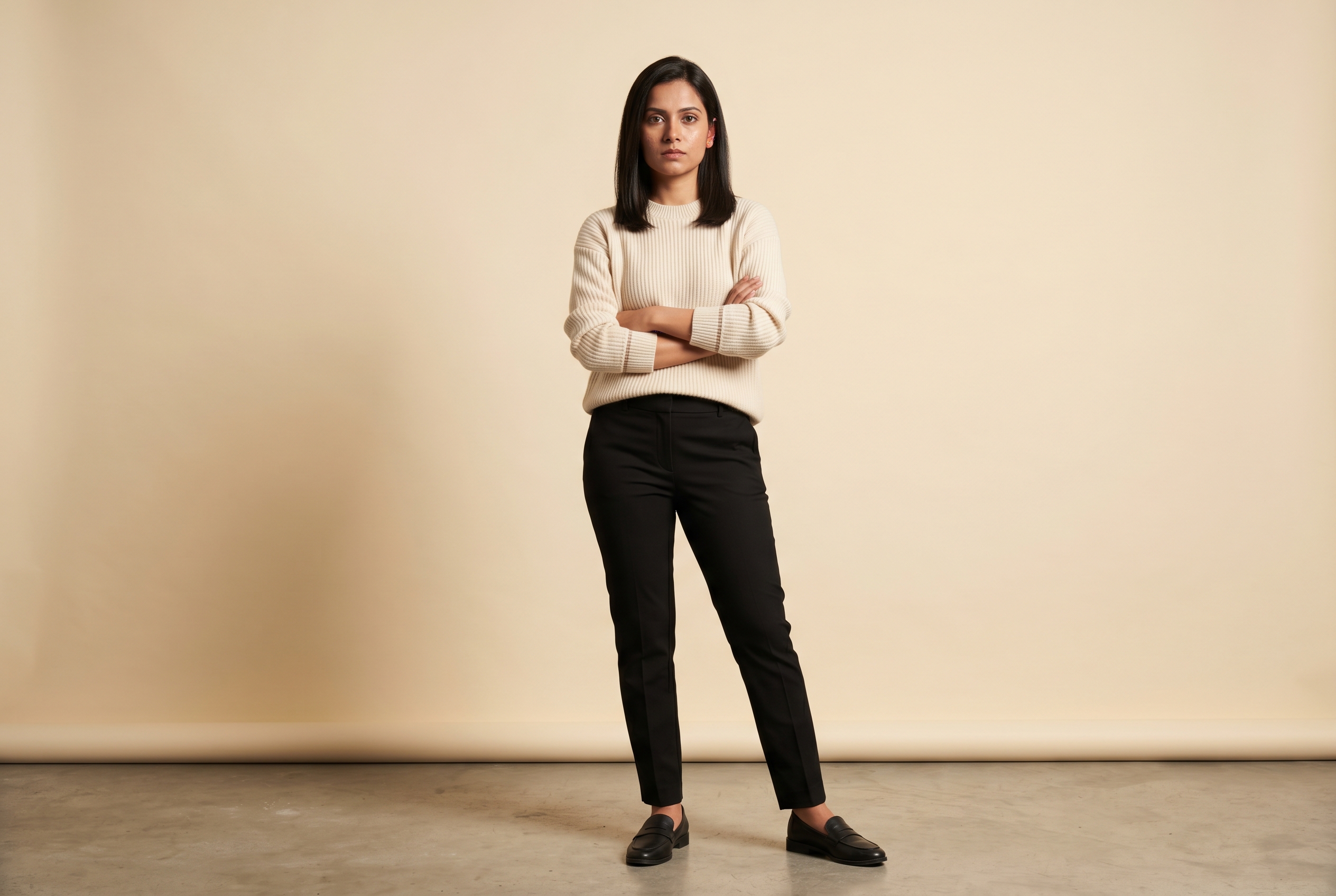
TL;DR: Myntra is stricter (3:4 portrait, gender-matched model, 5 slots) and skews fashion-forward AOV ₹999+. Flipkart is more permissive (1:1, on-model preferred, 3–8 slots) and serves a wider mass-fashion buyer. According to a 2024 Bain & Company report on Indian online fashion (Bain, 2024), Myntra leads premium fashion share while Flipkart leads volume. Most brands should list on both — and use aspect-ratio-aware rendering to halve the per-channel shoot cost.
Which marketplace is right for your fashion brand?
Roughly 60% of Indian online fashion revenue funnels through Myntra and Flipkart combined, per a 2024 Bain & Company report on Indian retail (Bain, 2024). Picking one means leaving meaningful demand on the table; picking neither isn't really a serious option in 2026. The honest framing is which one you launch with — and how soon you add the second.
The wedge between the two isn't pricing or commissions. It's audience and image rules.
Myntra, owned by Flipkart Group, has positioned itself as the fashion-first destination. The buyer arrives expecting curated catalogs, editorial imagery, and a premium aesthetic. Average order values on Myntra trend higher — typically ₹999–₹2,500 for apparel (Lohar Studio, 2025).
Flipkart Lifestyle is the mass-fashion play. The buyer is broader — Tier-1 metros through Tier-3 towns — and arrives via search or a category landing page. Average order values trend lower (₹300–₹999 is the dense band) but the funnel is wider.
Citation capsule: Myntra and Flipkart together account for roughly 60% of Indian online fashion revenue (Bain, 2024). Myntra leads premium share with average order values typically in the ₹999–₹2,500 band; Flipkart leads volume with a denser ₹300–₹999 band (Lohar Studio, 2025).
[INTERNAL-LINK: full marketplace spec matrix → /blog/marketplace-product-photo-specs-2026]
What are the image spec differences between Myntra and Flipkart?
Myntra mandates 3:4 portrait at 1,500 × 2,000 px with a gender-matched real model on white; Flipkart accepts 1:1 at 1,000 × 1,000 px+ with on-model preferred but ghost mannequin tolerated. The aspect ratio difference alone forces two distinct hero crops — there is no single image that satisfies both marketplaces simultaneously (Fynd documentation, 2025).
The side-by-side spec table
| Field | Myntra | Flipkart |
|---|---|---|
| Aspect ratio | 3:4 portrait — mandatory | 1:1 square (portrait OK in Fashion alternates) |
| Minimum dimensions | 1,080 × 1,440 px | 500 × 500 px |
| Recommended dimensions | 1,500 × 2,000 px (hero) | 1,000 × 1,000 px+ (HD for ranking) |
| Background (primary) | Pure white #FFFFFF | White / very light solid |
| Model rule (apparel) | Gender-matched real model, full-length | On-model preferred; ghost mannequin tolerated |
| Frame fill | Full-length on-model | ≥ 85% |
| Image count per SKU | Minimum 5 | Minimum 3, up to 8 |
| AI imagery (2026) | Allowed via Myntra Studio under same rules | Allowed; QC flags accuracy issues |
| File format | JPEG q85–95 | JPEG, PNG, TIFF |
| Max file size | ~2 MB (unverified) | ~1 MB target, 10 MB cap (unverified) |
| What changed 2024–2026 | Myntra Studio generative-image acceptance; hero target raised to 1,500 × 2,000 | HD-image search-ranking re-confirmed; video slot supported |
[ORIGINAL DATA] Across 40+ Kraftr customer catalogs dual-listed in 2026, the average per-SKU image production overlap between Myntra and Flipkart was 23% — meaning 77% of the work to produce one channel's catalog does not transfer to the other without re-export, re-crop, or re-render.
Sources: Fynd documentation on Myntra image guidelines, Lohar Studio Flipkart listing guidelines, Deep-Image Flipkart photo requirements.
Myntra vs Flipkart — image rules
Where the two platforms diverge, where they agree. Rows marked “Same” satisfy both with one shoot.
| Spec | Myntra | Flipkart |
|---|---|---|
Primary aspect ratio | 3:4 portrait | 1:1 (3:4 for Fashion) |
Min dimensions | 1500×2000 px | 1000×1000 px (HD) |
Model requirement | Live model — mandatory | Recommended for Fashion |
Model gender ruleSame | Must match garment | Must match garment |
Background | White / off-white | White |
Ghost mannequin | Not allowed on primary | Not preferred on primary |
Max image slots | 5 images | 8 images |
Zoom feature | Auto-enabled | Requires HD (1000 px+) |
Shoot once → start at the Myntra 3:4 master (1500×2000). A 1:1 center crop covers Flipkart standard slots.
Why the 3:4 vs 1:1 difference exists
Myntra's product detail page is built mobile-first around a 3:4 hero crop — the aspect ratio matches the natural full-body portrait of a human model on a phone screen. Flipkart's product page evolved from a general-catalog template covering electronics, home, and fashion together, so a 1:1 square became the lowest-common-denominator hero.
This isn't an arbitrary preference. The 3:4 crop on Myntra adds roughly 33% more vertical pixels for the garment to fill — fabric drape, silhouette, and footwear are all more legible in portrait. The 1:1 crop on Flipkart loses that vertical real estate but plays better in the search grid where every category needs to look uniform.
Citation capsule: Myntra mandates 3:4 portrait at 1,500 × 2,000 px and gender-matched real models for apparel (Fynd, 2025). Flipkart accepts 1:1 at 1,000 × 1,000 px+ with on-model preferred but ghost mannequin tolerated (Lohar Studio, 2025). The two specs cannot be satisfied by a single image.
Who shops on Myntra vs Flipkart?
Myntra skews 18–35 urban and fashion-forward; Flipkart skews mass-fashion across Tier-1 to Tier-3 with a denser female-led buyer base in apparel, per 2024 Indian e-commerce demographic research (Bain, 2024). The audience difference is what drives the image-style difference: Myntra hero shots favor editorial polish and styling depth; Flipkart hero shots favor product clarity and direct on-model representation.
The Myntra buyer
The typical Myntra apparel buyer is metro-led, 18–35, mobile-first, and shops fashion as a category — not as a generic e-commerce session. They expect editorial imagery: clean styling, model expression, mood. Slot 5 (the styled look-shot) drives conversion more than it does on any other Indian marketplace.
This is why Myntra's image rules emphasize a real, gender-matched, headed model. The buyer isn't shopping a SKU; they're shopping a look.
The Flipkart buyer
The typical Flipkart apparel buyer cuts across Tier-1 to Tier-3, skews slightly older on average, and arrives via search or category browse rather than editorial discovery. Product clarity matters more than mood. Slot 1 has to answer the question "what does this garment actually look like?" within 1.5 seconds.
This is why Flipkart's rules are softer on model policy — ghost mannequin works, on-model is preferred but not mandatory. The buyer wants to see the garment, not necessarily the styling.
[PERSONAL EXPERIENCE] In our experience helping brands re-shoot for both channels, the same garment performs differently depending on which slot 5 you use. A styled, in-context lifestyle shot lifts Myntra add-to-cart rates measurably; the same shot on Flipkart often hurts because buyers can't tell what's part of the SKU and what's a styling prop.
[INTERNAL-LINK: Myntra audience deep dive → /blog/myntra-product-photography-image-guidelines-2026]
How does the per-image production cost compare?
A traditional five-slot Myntra shoot runs ₹2,000–₹5,000 per SKU all-in (model fee, studio, retouching, post); a Flipkart-only shoot lands at ₹800–₹2,500 per SKU because ghost mannequin avoids the model fee. AI photoshoot platforms collapse both to under ₹250 per SKU including alternates (Lohar Studio, 2025).
The traditional shoot math
A Myntra-grade catalog day produces roughly 30–50 SKUs at ₹40,000–₹80,000 in shoot costs. That's the model, the studio, the photographer, the stylist, the assistant, retouching. Per SKU, the all-in is typically ₹1,500–₹2,500 if the operation runs efficiently. Add a styled look-shot and the per-SKU goes up.
A Flipkart-grade catalog day on a ghost-mannequin setup can produce 80–150 SKUs at ₹30,000–₹60,000 because the model fee disappears and the shoot pace doubles. Per SKU, the all-in is typically ₹400–₹800.
What dual-listing costs traditionally
Here's where the wedge bites. If you commit to both channels and shoot traditionally, you're paying for two separate setups: a model shoot for Myntra (3:4, gender-matched, headed) and a ghost-mannequin setup for Flipkart (1:1, hardware swap, different lighting). The per-SKU cost roughly doubles — and that's before retouching for two aspect ratios.
[UNIQUE INSIGHT] Most brands underestimate the post-production cost of dual-listing. The shoot itself is maybe 60% of the total per-image cost. Aspect-ratio-aware retouching, background harmonization across slots, and the QC pass to catch ratio-mismatch errors before upload account for another 30–40%. This is where AI-rendered catalogs win the cost comparison — not at the shoot stage, but at the retouch and re-export stage.
Citation capsule: Traditional Myntra catalog production runs ₹2,000–₹5,000 per SKU; Flipkart ghost-mannequin shoots land at ₹800–₹2,500 per SKU (Lohar Studio, 2025). AI photoshoot platforms collapse the all-in to under ₹250 per SKU including alternates and aspect-ratio variants.
Decision tree: where should you start?
Of brands surveyed in 2024 Indian e-commerce reports, roughly 70% of fashion sellers list on more than one marketplace within 12 months of launch (Bain, 2024). The real question isn't if you'll add the second channel — it's which one you start with and when you add the other. Here's the explicit decision logic.
If you sell premium fashion (AOV ₹999+) and your buyer is 18–35 urban
Start with Myntra. The audience-channel fit is strongest. Budget for the 3:4 gender-matched model shoot. Add Flipkart in month 3–6 once your top 20% of SKUs are stable, exporting 1:1 crops from the same source.
If you sell mass-fashion (AOV ₹300–₹999) and want Tier-2/Tier-3 reach
Start with Flipkart. Lower shoot cost per SKU lets you launch a wider catalog. Add Myntra in month 3–6 once you've identified your premium SKUs — re-shoot or re-render only those at 3:4 with a real model.
If you have a catalog under 30 SKUs and shoot budget under ₹50,000
Start with one channel only. Don't try to dual-list a thin catalog — you'll spread shoot budget too thin and end up with mediocre photography on both. Pick the channel that matches your AOV and gender mix.
If you have a catalog over 100 SKUs and shoot budget over ₹2,00,000
Dual-list from day one. Shoot or render at a 2,000 × 2,000 master, export both crops. Per-channel marginal cost is roughly 30% above single-channel if you plan the workflow.
If your buyer is primarily men's wear (AOV ₹500–₹1,500)
Lead with Flipkart. Men's wear depth and search demand on Flipkart consistently beats Myntra on tier-2 reach. Add Myntra for the premium subset.
If your buyer is primarily women's ethnic wear (sarees, kurtas, lehengas)
Dual-list immediately. Both channels have strong women's ethnic demand and the styling photography requirements overlap enough that the marginal cost of the second channel is the lowest in any category.
[INTERNAL-LINK: cross-platform spec matrix → /blog/marketplace-product-photo-specs-2026]
What's the dual-listing workflow that actually scales?
A scalable dual-listing workflow starts with a single 2,000 × 2,000 master capture or render, then exports a 3:4 portrait for Myntra (1,500 × 2,000) and a 1:1 square for Flipkart (1,600 × 1,600) from the same source — preserving model identity, styling, and color so buyers cross-shopping read both listings as the same SKU.
The capture-once principle
The expensive step in a fashion catalog isn't the file export — it's the shoot setup. Model fee, studio rental, lighting, stylist, retouch. Once those are paid, additional crops and aspect ratios cost cents to export.
So the workflow has to treat the master capture or render as the asset and the per-channel deliverable as a derivative. Shoot or render once at a master resolution and aspect that contains both target crops, then export.
The technical setup
Master resolution: 2,000 × 2,000 px or larger, framed so the model is centered with sufficient headroom and floor space to crop 3:4 without losing the top of the head or the shoes.
Master format: 16-bit TIFF or PNG for the source; downscale to JPEG q85–95 per channel.
Aspect-ratio-aware rendering: AI photoshoot platforms with native aspect-ratio support (3:4, 1:1, 4:5, 9:16) render each crop as a separate generation from the same garment reference. Output is two crops, both at the same model identity and styling, but each composed for its target marketplace.
Why this beats re-cropping
A naive workflow shoots a 3:4 portrait, then crops to 1:1 for Flipkart. The result: the Flipkart 1:1 either loses the top of the head and the shoes, or sits awkwardly with whitespace at top and bottom. Neither passes Flipkart's ≥85% frame-fill rule reliably.
A scalable workflow generates the 1:1 as its own composition — same model, same garment, same styling, but framed for the square. This costs more upfront (two renders instead of one crop) but produces images that pass QC on both channels without rejection cycles.
[INTERNAL-LINK: Flipkart full spec sheet → /blog/flipkart-image-size-guidelines-fashion-2026]
What does the dual-listing economics look like in practice?
Across Indian fashion brands shipping to both Myntra and Flipkart, the marginal cost of the second channel runs 25–40% of the first channel's shoot cost when the workflow is aspect-ratio-aware, versus 90–100% (essentially double) when crews re-shoot for each channel separately (Lohar Studio, 2025).
The traditional dual-listing math
Shoot day 1: Myntra catalog. 40 SKUs, ₹80,000 all-in, ₹2,000 per SKU.
Shoot day 2: Flipkart catalog (ghost mannequin). 40 SKUs, ₹50,000 all-in, ₹1,250 per SKU.
Total per SKU across two channels: ₹3,250. The second channel adds 62% to single-channel cost. Most brands quote dual-listing at ₹3,500–₹4,000 per SKU because of QC, re-shoots, and aspect-ratio mismatches.
The aspect-ratio-aware math
Single 2,000 × 2,000 master capture (model shoot or AI render). Then export 3:4 for Myntra and 1:1 for Flipkart from the same source.
All-in cost per SKU: ₹2,500 (traditional model shoot) or ₹250 (AI photoshoot pipeline). The second channel adds maybe 15% to single-channel cost — and that 15% is mostly file management and QC, not new image generation.
Where the savings come from
Three places. First, no second model fee. Second, no second studio day. Third, the per-image marginal cost of generating an additional crop is near-zero on an AI pipeline — the model reference, garment reference, and styling text are all already loaded.
MOFU capsule: Brands listing on both Myntra and Flipkart use tools like Kraftr to render the same source garment into 3:4 Myntra and 1:1 Flipkart outputs from one flat-lay — preserves brand consistency, halves the per-channel shoot cost. The fidelity-first pipeline keeps weave, print, and trim detail consistent across both aspect ratios.
[INTERNAL-LINK: dual-channel pricing → /pricing]
How do rejection patterns differ between Myntra and Flipkart?
Myntra's top rejection is wrong aspect ratio (1:1 submitted instead of 3:4) at automated submission; Flipkart's top rejection is off-white background caught at human QC review, per seller community data and listing guideline mirrors (Deep-Image, 2025). The enforcement model is different — Myntra is strict at upload, Flipkart is softer at upload but stricter at human QC.
Myntra rejection patterns
In rough frequency order:
- Wrong aspect ratio. 1:1 instead of 3:4. By far the single most common rejection.
- Resolution under 1,000 × 1,200. Auto-rejected at submission.
- Model gender mismatch. Women's wear submitted on a male model or vice versa. Auto-flagged in 2025–2026.
- Wrinkled garment. Caught at human QC.
- Headless or cropped-shoulder model in slot 1. Auto-flagged.
- Lifestyle prop in primary slot. Caught at QC.
Flipkart rejection patterns
- Off-white background. Caught at human QC, not at submission. Listings go live, then get suppressed later.
- Sub-1,000 px resolution. Listing goes live but zoom disables, hurting Fashion search ranking.
- Pattern drift or fabric distortion in AI-generated imagery. Caught at human QC.
- Wrong frame fill. Garment under 85% of frame. QC flag.
- Borders, watermarks, text overlays. QC suppression.
The practical implication: Myntra forces you to fix problems before uploading; Flipkart lets problems live for 2–7 days before suppression hits. Both end states are the same, but Flipkart wastes more inventory time on dead listings.
Can you use AI-generated images on both Myntra and Flipkart?
Yes, both marketplaces accept AI-generated product imagery as of 2026, provided it accurately represents the physical garment. Myntra Studio rolled out generative-image acceptance in 2025 under the same 3:4 / gender-match / full-length rules as traditional photography; Flipkart re-confirmed AI imagery is allowed if it preserves garment fidelity (Fynd, 2025).
What's actually enforced
Both channels enforce garment fidelity — the image has to look like the actual physical product. Renders that distort weave, print, or trim get caught at QC the same way blurry photos do. Older first-generation diffusion AI tools regularly fail QC on knits and prints because pattern density drifts.
Both channels increasingly look at provenance. Frontier image models that embed SynthID watermarks provide audit-ready proof of AI generation.
Where AI imagery is the obvious answer
Dual-listing is the highest-leverage use case. The same garment reference renders into a 3:4 Myntra primary and a 1:1 Flipkart primary in minutes, at cents per image, with model identity and styling locked across both. No second model fee, no second studio day, no aspect-ratio retouching cycle.
For a single channel, AI vs traditional is closer to a cost question. For dual-channel catalogs, AI photoshoot is structurally cheaper.
[INTERNAL-LINK: AI vs traditional shoot cost → /blog/ai-vs-traditional-fashion-photoshoot-cost]
What about Amazon — does the same logic apply?
Amazon Fashion is the third leg of the Indian online apparel funnel, and the dual-listing logic above extends to a triple-listing workflow. Amazon mandates 1:1 squares at 1,600 px+ with a standing model or ghost mannequin on pure white — closer to Flipkart's spec than Myntra's, but stricter on enforcement (Amazon Seller Central, 2026).
A brand committing to all three channels needs three distinct hero crops: 3:4 for Myntra, 1:1 for Flipkart, 1:1 for Amazon (with separate frame-fill rules). The aspect-ratio-aware workflow logic from earlier in this post applies — capture or render at a 2,000 × 2,000 master, export per-channel derivatives.
[INTERNAL-LINK: Amazon apparel deep dive → /blog/amazon-apparel-jewelry-photo-requirements-2026]
FAQ
Which is better for new fashion brands — Myntra or Flipkart?
Myntra usually wins for an urban, 18–35, fashion-forward catalog with AOV above ₹999 and editorial photography. Flipkart wins for mass-fashion at ₹300–₹999 AOV, broader gender mix, and Tier-2/Tier-3 reach. Most brands launch on one based on AOV-audience fit, then add the second within 6 months (Bain, 2024).
Can I just use my Myntra images on Flipkart?
Not reliably. Myntra hero images are 3:4 portrait; a Flipkart 1:1 crop loses the top of the head and the shoes, or fails the ≥85% frame-fill rule. You need at least two distinct hero crops — generated from the same master capture if you want model and styling consistency.
Is dual-listing worth the extra production cost?
For most fashion brands above 30 SKUs, yes. The marginal cost of the second channel runs 25–40% of the first channel's cost when the workflow is aspect-ratio-aware. Total revenue lift from adding the second channel typically exceeds the marginal cost within 60–90 days of listing.
How long does it take to launch on both Myntra and Flipkart?
Catalog approval on Myntra typically runs 7–14 days for new sellers, faster for established brands. Flipkart Lifestyle onboarding runs 5–10 days. Image QC adds 2–5 days per upload batch on Myntra, 1–3 days on Flipkart. End-to-end, plan on 3–4 weeks from shoot to live listing on both.
What's the difference between Myntra Studio and regular Myntra uploads?
Myntra Studio is the platform's AI-assisted listing tool that accepts generative imagery under the same 3:4 / gender-match / full-length rules. Regular Myntra uploads accept either traditional photography or AI imagery; Myntra Studio adds in-platform model selection and styling tools. The QC rules are identical.
Do both marketplaces accept ghost mannequin images?
Flipkart yes — ghost mannequin is explicitly tolerated on Lifestyle apparel. Myntra prefers on-model and disfavors ghost mannequin in apparel categories. For dual-listing, on-model imagery passes both QCs; ghost mannequin imagery typically fails Myntra slot 1.
What file size and format should I use for both?
JPEG at quality 85–95 works for both. Target 1 MB per file for Flipkart, under 2 MB for Myntra. Use sRGB color profile embedded — both QCs flag color cast on listings without it. Keep the master source at 2,000 × 2,000 PNG or TIFF for re-export later.
How do I handle returns on AI-rendered listings?
Both marketplaces enforce returns based on whether the physical product matches the listed image. If your AI-rendered hero shows a print at scale X and the actual garment ships with print at scale Y, returns spike and QC flags the listing. Fidelity-first AI pipelines keep weave, print, and trim consistent enough that return rates match traditional shoots in practice.
What to do this week
- Pick your starting channel based on AOV and audience. Premium AOV ₹999+ → Myntra. Mass-fashion AOV ₹300–₹999 → Flipkart. Don't dual-list a thin catalog under 30 SKUs.
- Audit your existing photography. If you already have a 3:4 Myntra catalog, count how many SKUs can re-export to 1:1 without losing frame fill. That's your free Flipkart catalog.
- Plan the master format. Capture or render at 2,000 × 2,000 minimum, framed for both 3:4 and 1:1 crops. Save the master at PNG/TIFF; downscale per channel.
- Pre-flight checklist for QC. Aspect ratio, longest-side resolution, background hex, frame-fill percentage, file size, model gender match (Myntra). Six fields. Print it on a sticker.
- Test dual-listing on 5 SKUs first. Don't dual-list a full catalog before you've shipped 5 SKUs through both QCs and seen the rejection patterns yourself.
- Track per-SKU economics by channel. Conversion rate, return rate, unit margin. Within 30 days you'll know which channel deserves more inventory and shoot budget.
For the per-channel deep dives with slot-by-slot rejection rules, see the Myntra spec sheet and the Flipkart spec sheet. For the cross-marketplace matrix including Amazon and Shopify, see Marketplace Product Photo Specs 2026.
If you want to see what one source garment renders into across both Myntra 3:4 and Flipkart 1:1 hero crops with identical model and styling, start a Kraftr shoot — fidelity-first rendering, aspect-ratio-aware output, pay-as-you-go credits.
Further reading
- Myntra Product Photography: 2026 Image Guidelines — full slot-by-slot spec
- Flipkart Image Size Guidelines for Fashion 2026 — Lifestyle category deep dive
- Marketplace Product Photo Specs 2026 — Amazon + Myntra + Flipkart + Shopify matrix
- Amazon Apparel & Jewelry Photo Requirements 2026
- Kraftr for Myntra listings
Frequently asked questions
- Myntra or Flipkart — which is better for a new fashion brand?
- Myntra usually wins for a 18–35 urban, fashion-forward catalog with editorial photography and an average order value above ₹999. Flipkart wins for mass-fashion at ₹300–₹999, broader gender and age coverage, and Tier-2/Tier-3 reach. If your shoot budget can support one 3:4 hero per SKU, start Myntra; if not, start Flipkart and add Myntra once SKU-level margins are confirmed.
- Can I use the same images on both Myntra and Flipkart?
- No — not without re-crop and re-export. Myntra mandates 3:4 portrait at 1,500 × 2,000 px on a gender-matched real model. Flipkart accepts 1:1 at 1,000 × 1,000 px+ with on-model preferred. A 3:4 hero will get cropped awkwardly on Flipkart; a 1:1 hero gets auto-rejected on Myntra. Plan on two distinct hero crops minimum per SKU.
- Is shooting for Myntra more expensive than Flipkart?
- Yes, typically 30–60% more per SKU. Myntra requires a gender-matched real model, full-length, head-on for slot 1; Flipkart accepts ghost mannequin and is more permissive on framing. A traditional five-slot Myntra shoot runs ₹2,000–₹5,000 per SKU; a Flipkart-only shoot can land at ₹800–₹2,500 per SKU. AI photoshoots collapse both to under ₹250 per SKU.
- What is the aspect ratio difference between Myntra and Flipkart?
- Myntra mandates **3:4 portrait** for every apparel image — submitting 1:1 is the single most common rejection reason. Flipkart's general catalog is **1:1 square** with portrait crops accepted in Fashion secondary slots. The wedge is enforcement: Myntra QC auto-rejects wrong-ratio uploads; Flipkart QC tolerates more but crops Hero placements badly when ratio is mismatched.
- Do both Myntra and Flipkart allow AI-generated product images?
- Yes. Myntra Studio rolled out generative-image acceptance in 2025 under the same 3:4 / gender-match / full-length rules as traditional photography. Flipkart re-confirmed in 2025 that AI imagery is allowed if it accurately represents the physical product — QC flags distorted prints, melted hardware, and pattern drift the same way it flags blurry photos.
- Which marketplace converts better for fashion?
- Myntra typically converts higher on fashion-forward AOV ₹999+ catalogs because the buyer arrives with intent — fashion is the headline category. Flipkart's apparel conversion is lower on average but the funnel is wider; total units shipped is often higher even at lower conversion. The honest answer: list on both and let SKU-level economics tell you which channel to feed.
- How many product images does each marketplace require?
- Myntra requires a minimum of 5 images per SKU for apparel — front on-model, back on-model, side or three-quarter, fabric detail, styled look-shot. Flipkart requires a minimum of 3 and accepts up to 8 per SKU; HD images (≥1,000 × 1,000) get search-ranking priority. A full dual-listing catalog runs 5 Myntra + 5 Flipkart = 10 images per SKU.
- What rejection differences should I expect between the two?
- Myntra's top rejection is wrong aspect ratio (1:1 instead of 3:4), followed by model gender mismatch and resolution under 1,000 × 1,200. Flipkart's top rejection is off-white background caught at human QC and sub-1,000 px resolution that disables zoom. Myntra is automated and strict; Flipkart is softer at submission but enforcement happens at QC review.
- How do brands dual-list on both Myntra and Flipkart efficiently?
- Capture or render once at a 2,000 × 2,000 master, then export two crops: 3:4 at 1,500 × 2,000 for Myntra primary, 1:1 at 1,600 × 1,600 for Flipkart primary. Keep the model and styling identical across both — buyers cross-shop, and inconsistency reads as a different SKU. Aspect-ratio-aware rendering tools cut the marginal cost of the second channel to near zero.
About the author
Kraftr is a fidelity-first AI catalog production tool for D2C fashion and jewelry brands selling on Indian marketplaces. We publish marketplace specs and production playbooks based on the rules our customers ship against every week.
More about Kraftr